
Hearing that your child may need sedation during a dental visit can feel unsettling. Many parents immediately wonder whether it is safe, why it is necessary, and what their child will actually experience. In pediatric dentistry, sedation is not about convenience — it is a carefully considered medical approach used to reduce fear, manage discomfort, and allow essential dental care to be completed safely.
The different types of sedation dentistry used for children are selected based on a child’s age, medical history, anxiety level, and the type of treatment needed. In settings that provide sedation dentistry for children, the goal is always the same: protect a child’s emotional well-being while ensuring quality dental care.
What is child sedation dentistry and why might a child need it?
Child sedation dentistry refers to the use of medications that help a child relax, stay calm, or sleep during dental procedures. It is recommended when anxiety, age, or treatment complexity makes it difficult for a child to cope with dental care while awake and fully alert.
Some children are simply too young to understand instructions. Others may have strong dental fear, a sensitive gag reflex, special healthcare needs, or require lengthy procedures such as multiple kids tooth filling treatments. In these situations, attempting care without sedation can be stressful, incomplete, or unsafe. Sedation allows the dental team to work efficiently while minimizing emotional trauma.
What are the different types of sedation dentistry for children?
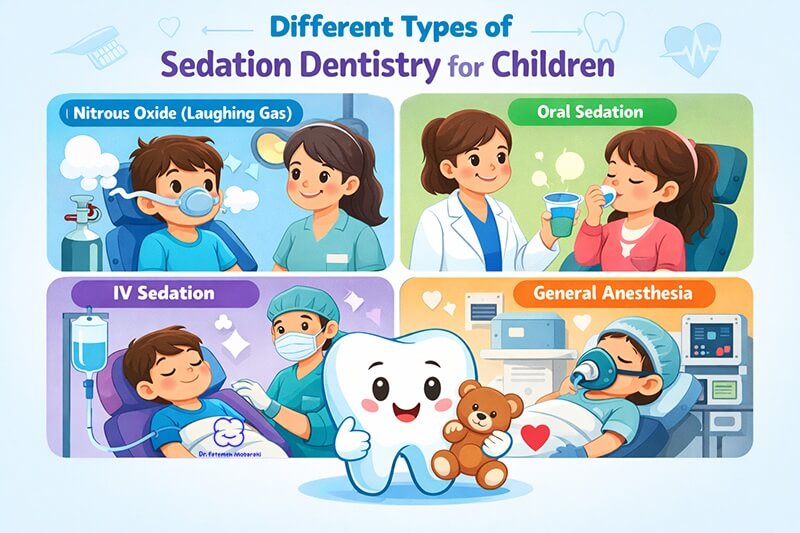
The different types of sedation dentistry form a spectrum, ranging from very mild relaxation to deep sleep. The right level depends on how anxious the child is, how long the procedure will take, and their medical background. The different types of dental sedation commonly used in pediatric dentistry include:
1. Nitrous Oxide (Laughing Gas)
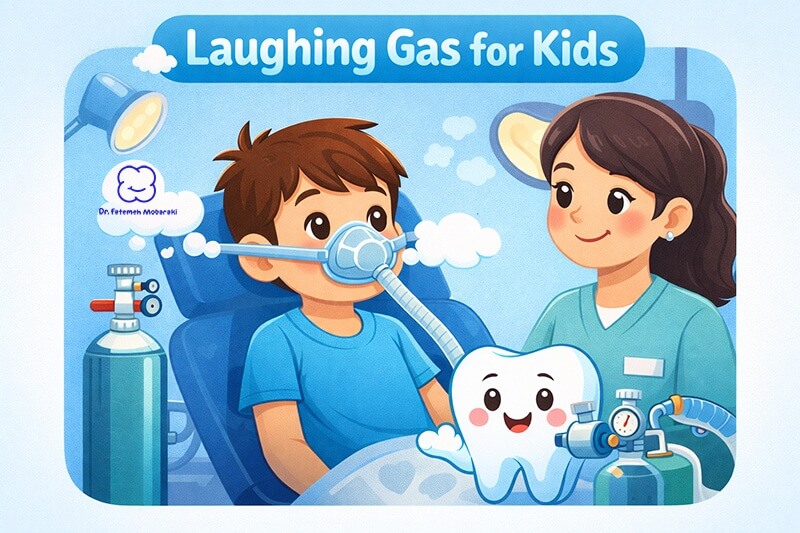
This is the mildest and most widely used option. The child breathes a mixture of oxygen and nitrous oxide through a small nose mask. It produces a sense of calm, lightness, and reduced awareness of fear, but the child remains awake and able to respond.
Because the effect wears off within minutes after the mask is removed, children typically return to normal quickly. For parents who want a deeper comparison, Laughing Gas for Kids explains this method in more detail.
2. Oral Conscious Sedation
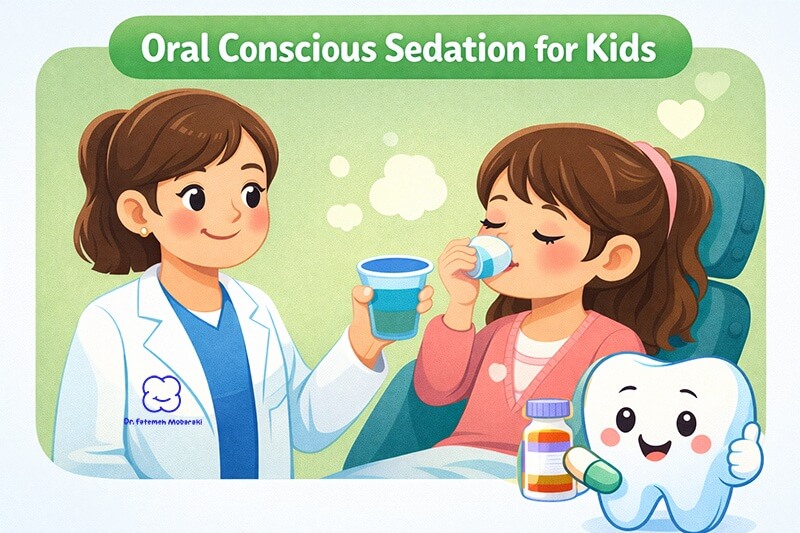
Here, medication is given by mouth before the appointment. It makes a child drowsy and relaxed, though they remain conscious. Some children may appear sleepy or slightly unsteady afterward.
This option is useful for moderate anxiety or longer procedures. Unlike nitrous oxide, its effects last longer, so children need monitoring until the sedation wears off.
3. IV Sedation
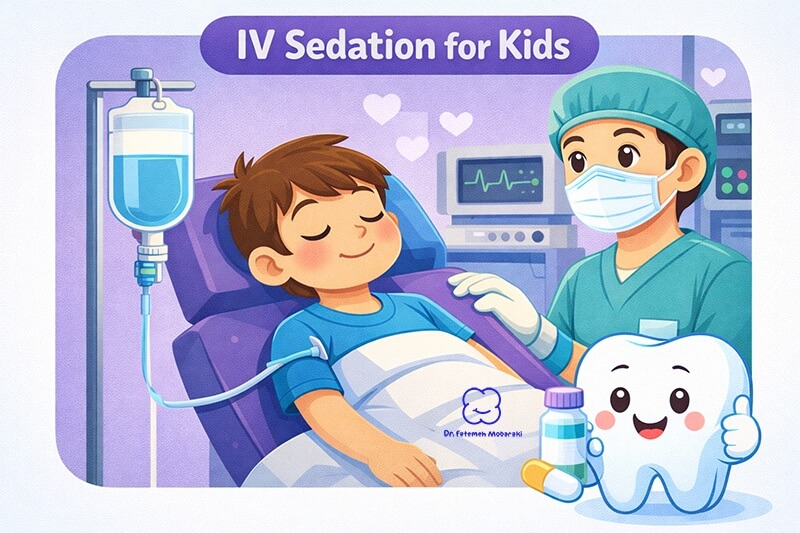
Medication is delivered through a vein under strict monitoring. It produces a deeper level of sedation than oral medication. Children are very relaxed and may not remember the procedure, but they are still breathing on their own.
This approach is typically used when multiple procedures are needed in one visit or when anxiety is severe.
4. General Anesthesia
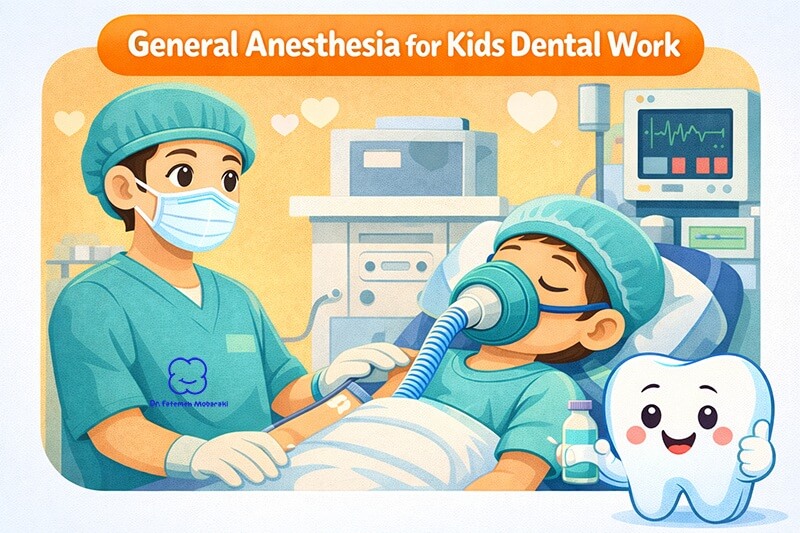
This is the deepest level. The child is fully asleep and unaware. It is used in hospital or specialized settings and is reserved for extensive dental needs, very young children with major treatment requirements, or cases where cooperation is not possible. If you want to know the differences between them, read General Anesthesia vs Sedation for Kids.
How does nitrous oxide sedation in pediatric dentistry work?
Nitrous oxide sedation in pediatric dentistry works through inhalation. Within minutes, the gas reaches the brain and produces a calming effect by altering how the body perceives sensations and anxiety.
Children often describe feeling “floaty” or warm. They remain awake and can talk, but worries fade into the background. Because oxygen continues to flow, breathing stays normal. Once the mask is removed, pure oxygen clears the gas from the body quickly, which is why children can usually resume normal activities soon after.
This method is considered one of the safest forms of pediatric sedation when used appropriately.
When do dentists decide sedation is necessary?
Sedation is not routine for every child. Dentists evaluate several factors:
- Age and developmental level
- Ability to follow instructions
- Extent of dental decay or treatment needed
- Past dental experiences
- Medical history
- Anxiety intensity
A child who needs several restorations on primary teeth, has difficulty sitting still, or becomes distressed in the chair may benefit from sedation. The aim is to prevent negative memories that could shape lifelong dental fear.
Is pediatric sedation safe for children?
When properly planned, pediatric sedation is considered safe. Safety depends on thorough medical evaluation, correct dosing, and continuous monitoring of breathing, heart rate, and oxygen levels.
Parents are asked about allergies, medications, sleep patterns, and past reactions to sedation. Fasting instructions are provided when needed. Sedation is avoided or modified for certain medical conditions. These protocols are standard in pediatric dentistry worldwide.
How does sedation affect a child during treatment?
The effects vary depending on which of the different types of dental sedation is used.
With nitrous oxide, children stay responsive but relaxed. With oral or IV sedation, they may appear sleepy and less aware. Under general anesthesia, they are fully asleep. Pain control still comes from local anesthesia, which numbs the teeth and gums.
Many children have little or no memory of procedures done under moderate or deep sedation, which can reduce future fear.
What should parents expect after sedation?
Recovery depends on the sedation level. After nitrous oxide, children typically feel normal quickly. After oral or IV sedation, drowsiness may continue for several hours.
Parents are advised to supervise closely, offer soft foods, and avoid strenuous activity. Mild nausea or irritability can occur but usually resolves. Clear post-care instructions are provided for each child.
How do dentists choose the right sedation option?
Selection involves balancing safety, effectiveness, and emotional comfort. A mildly anxious school-aged child may only need nitrous oxide. A toddler needing extensive cavity treatment may require deeper sedation.
The dentist also considers whether procedures can be completed in one visit. Combining treatments under a single sedation session can reduce repeated stress.
Expert perspective on sedation in pediatric dentistry
Clinical studies show that appropriate sedation improves treatment completion rates and reduces psychological stress in children with dental anxiety. Monitoring standards, dosing guidelines, and training requirements are well established in pediatric healthcare, supporting safe use when protocols are followed.
How is sedation dentistry approached in Dubai?
In Dubai, pediatric dental care follows international safety standards, with an emphasis on child-friendly environments and behavior guidance. A pediatric dentist in Dubai working in this setting, such as Dr. Mobaraki, integrates behavioral techniques first and considers sedation when emotional or medical needs require additional support.
Does sedation replace good oral care habits?
No form of sedation prevents cavities. It simply allows treatment to be completed comfortably. Preventive care — brushing with fluoride toothpaste, healthy diet, and regular checkups — remains essential to protect enamel and primary teeth.
What questions should parents ask about sedation?
Parents often ask:
- Why is this level of sedation recommended?
- How long will it last?
- What monitoring is used?
- What are the recovery instructions?
Clear communication builds trust and helps families feel prepared.
Final thoughts on the different types of sedation dentistry
The different types of sedation dentistry exist to match care to a child’s emotional and medical needs. From mild relaxation with nitrous oxide to deeper approaches for complex care, each option has a defined role.
Understanding the different types of sedation and how they are used helps parents feel less anxious and more confident in decisions about their child’s oral health. When chosen carefully, sedation supports safe, compassionate dental care while protecting a child’s long-term relationship with dentistry.