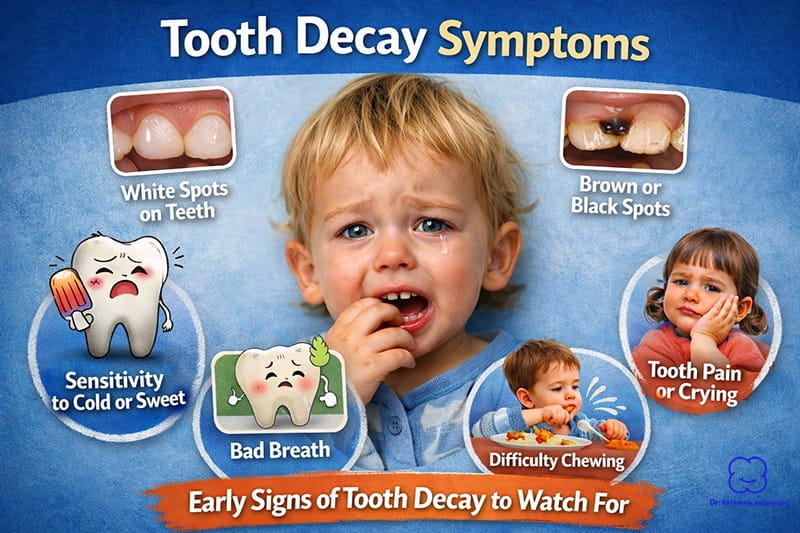

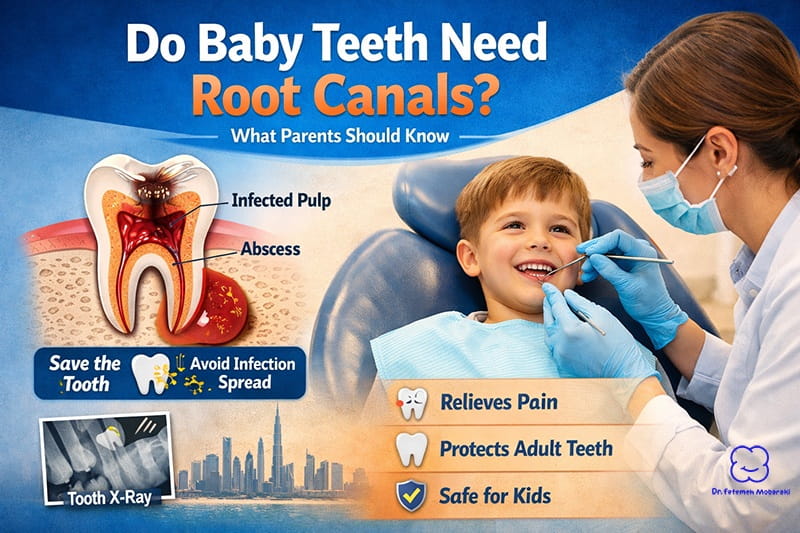
Parents are often surprised to hear that baby teeth need root canals. Because these teeth eventually fall out, it can seem unnecessary to treat them so thoroughly. In reality, primary teeth play a critical role in pain control, chewing, speech development, and guiding permanent teeth into place. When infection reaches the inner nerve tissue, preserving the tooth is often healthier than removing it.
As a pediatric dentist in palm jumeirah i frequently speak with families who worry that a severe cavity in a child automatically means extraction. In many cases, modern pediatric dentistry focuses on saving the tooth when possible, especially if it still has years before it would naturally loosen.
Why would baby teeth need root canals?
Yes — baby teeth need root canals when infection or deep decay reaches the pulp, the soft inner tissue containing nerves and blood vessels. At that stage, simple fillings are no longer enough. The goal shifts from repairing enamel to removing infection and preventing pain or swelling.
Primary teeth have thinner enamel and dentin than adult teeth. Cavities spread faster, and children may not feel symptoms until the infection is advanced. Once bacteria enter the pulp chamber, inflammation builds pressure inside the tooth, which can lead to dental abscess formation.
Leaving the infection untreated can affect surrounding bone and even the developing permanent tooth underneath.
Understanding infection inside primary teeth
The pulp of a baby tooth reacts differently from that of a permanent tooth. Children’s immune responses can localize infection for a while, which sometimes delays visible swelling. However, X-rays often reveal bone changes before parents notice symptoms. Parents who want a deeper overview of how infection develops and how treatment works often find a root canal treatment guide helpful for understanding the step-by-step process in simple terms.
When dentists talk about a root canal for baby tooth, they are referring to removing infected pulp tissue, disinfecting the space, and sealing the tooth to prevent reinfection. This is a standard approach in managing deep decay in children.
When is a root canal in children recommended?
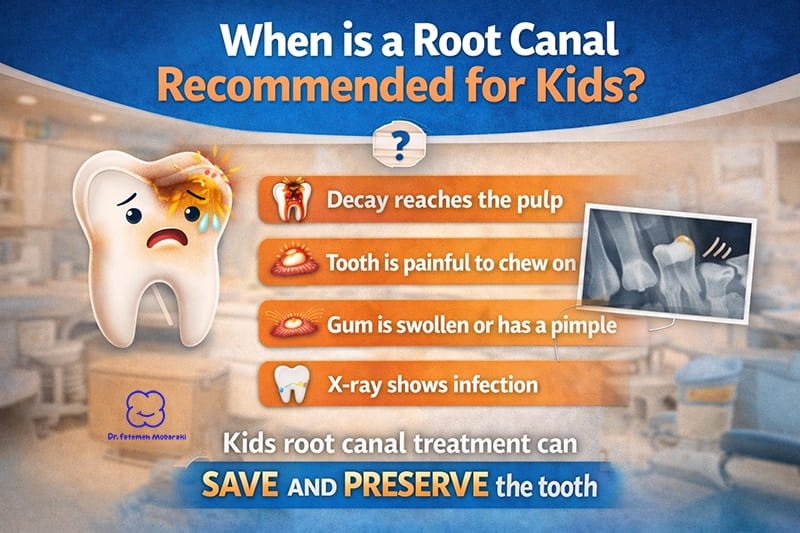
A root canal in children is usually advised when:
- Decay reaches the pulp
- A tooth is painful to chew on
- There is swelling or a gum pimple
- X-rays show infection near the root
- Trauma exposes the pulp
At this stage, kids root canal treatment helps keep the tooth in place until it is naturally ready to fall out. Removing a baby tooth too early can cause neighboring teeth to drift, which may create crowding later.
How is the procedure different from adult root canals?
A root canal treatment on baby tooth is adapted to the structure of primary teeth. The roots are thinner and naturally dissolve as the permanent tooth grows, so materials used inside are resorbable and safe for the body.
There are typically two types:
Pulpotomy – Only the infected upper pulp is removed, and healthy root tissue is preserved.
Pulpectomy – All infected pulp tissue in the canals is removed and replaced with a biocompatible filling.
Both are gentle procedures performed under local anesthesia. Children usually tolerate treatment well with proper behavior guidance.
Do children feel pain during the treatment?
No. The purpose of treatment is to stop pain. Modern pediatric dental care uses numbing techniques designed specifically for children. After the infection source is removed, children often feel immediate relief.
If a child is very young, anxious, or needs multiple procedures, general anesthesia for kids dental work may be discussed to ensure comfort and safety during treatment.
Is it safe for young children?
Yes. Root canal treatment for kids is safe when performed by trained pediatric dental professionals. The materials used are designed for primary teeth and are compatible with natural root resorption.
Dentists carefully assess medical history, tooth condition, and child cooperation before recommending the procedure. Research in pediatric dental care supports preserving infected primary teeth when feasible rather than extracting them prematurely.
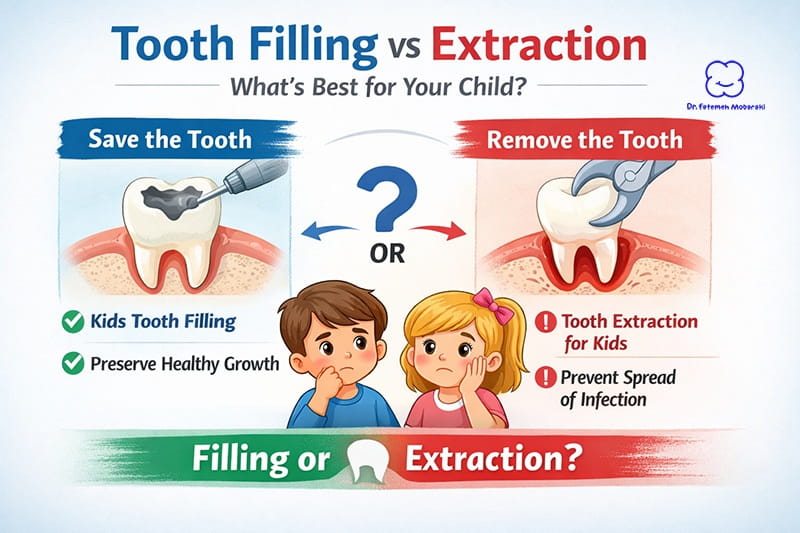
Why not just remove the tooth?
Extraction may seem simpler, but it has consequences. Baby teeth maintain space for permanent teeth and support normal jaw growth. Early loss can lead to:
- Crowding
- Bite misalignment
- Speech difficulties
- Chewing problems
A treated baby tooth continues functioning normally until its natural shedding time.
Signs parents might notice at home
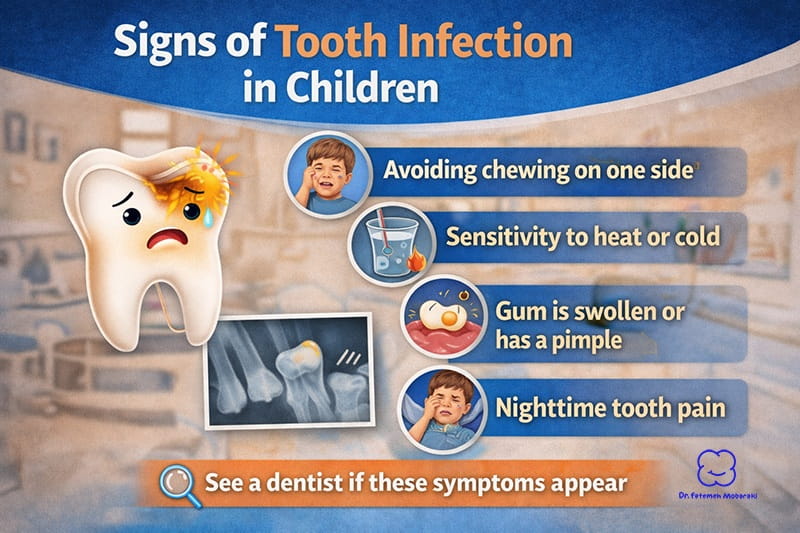
Children do not always report pain clearly. Watch for:
- Avoiding chewing on one side
- Sensitivity to hot or cold
- Swelling in the gum
- Night pain
- A small bump on the gum
These signs indicate a need for evaluation, especially if decay is visible.
The role of crowns after treatment
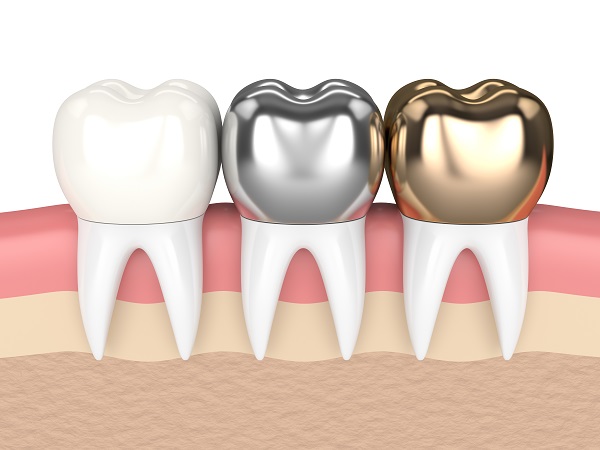
After a pulp treatment, the tooth often needs a protective crown. Primary teeth weakened by infection are more prone to fracture. Stainless steel or tooth colored crowns for baby teeth seal the tooth and prevent leakage of bacteria.
This step is not cosmetic; it is structural protection.
Expert clinical perspective
Studies in pediatric dental care consistently show that pulp therapy in primary teeth has high success rates when infection is properly removed and the tooth is well sealed. Preserving the tooth maintains function and reduces the risk of space loss that can complicate future orthodontic development.
Pediatric dental care in Dubai
Families seeking care in Dubai often have access to advanced diagnostic imaging and child-focused treatment environments. Pediatric practices emphasize minimally invasive approaches, preventive fluoride strategies, and early intervention to avoid severe infections whenever possible.
Dr. Fatemeh Mobaraki notes that early checkups help detect deep cavities before children experience pain, allowing more conservative treatment options.
Parents exploring topics like Reasons for General Anesthesia in Kids often discover that cooperation level, not just procedure type, influences how care is delivered.
Can this be prevented?
Most cases leading to root canals begin with untreated cavities. Prevention focuses on:
- Twice-daily brushing with fluoride toothpaste
- Limiting sugary snacks and drinks
- Routine dental visits
- Early sealants on molars
- Addressing small cavities promptly
Primary teeth are more vulnerable to rapid decay, so early care matters.
What happens if treatment is delayed?
Infection can spread beyond the tooth. This may cause facial swelling, fever, or damage to the permanent tooth bud. Severe cases sometimes require antibiotics or emergency care.
Prompt treatment protects both comfort and long-term oral development.
Final thoughts
Yes, baby teeth need root canals in certain situations, particularly when infection reaches the pulp. These procedures are designed to relieve pain, stop infection, and preserve the tooth’s role in guiding healthy development. Treating primary teeth is not about saving something temporary — it is about protecting a child’s overall oral health and future smile.