
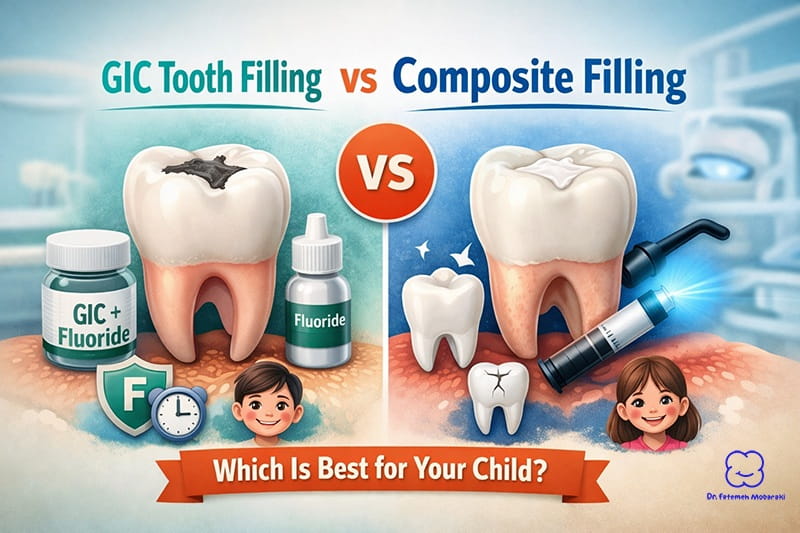
When a child develops a cavity, one of the first decisions parents face is choosing the right type of filling. The question of gic tooth filling vs composite filling often comes up because both options are widely used in pediatric dentistry, yet they behave differently in a child’s mouth.
As a pediatric dentist in Dubai, I often see parents unsure about which material is safer, longer-lasting, or more suitable for baby teeth. Understanding the difference can make this decision much easier and less stressful.
In most cases, both materials are effective—but the right choice depends on your child’s age, cavity size, and cooperation level during treatment.
What Is the Difference Between GIC Tooth Filling vs Composite Filling?
The main difference in gic tooth filling vs composite filling lies in how each material interacts with the tooth and the clinical situation it is used for.
GIC (Glass Ionomer Cement) is a fluoride-releasing material that bonds chemically to the tooth. It is often chosen for younger children or when a quick, moisture-tolerant treatment is needed.
Composite filling is a resin-based material that bonds using adhesive techniques. It is stronger and more resistant to chewing forces but requires a dry working environment and more precision during placement.
For parents, understanding this difference is key when deciding on a tooth filling for kids, especially in early-stage cavities where both options may be suitable.
When Is GIC Filling Recommended for Children?
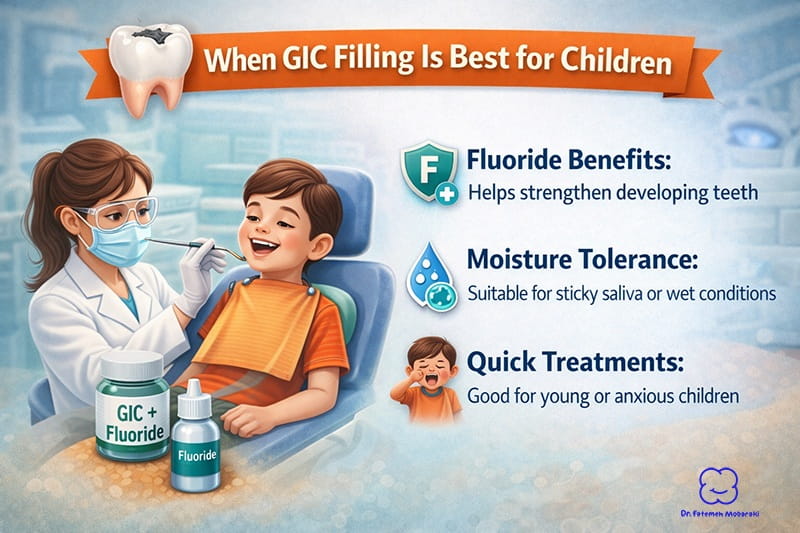
GIC fillings are usually recommended when simplicity and safety are priorities.
They are commonly used for:
- Very young or anxious children
- Cavities in baby teeth that may fall out soon
- Situations where keeping the tooth completely dry is difficult
Because GIC releases fluoride, it can help slow down further decay. This makes it particularly useful in children who are at higher risk of cavities.
In some cases, when cooperation is limited, dentists may also consider pediatric dental sedation to ensure the procedure is completed safely and comfortably.
When Is Composite Filling the Better Option?
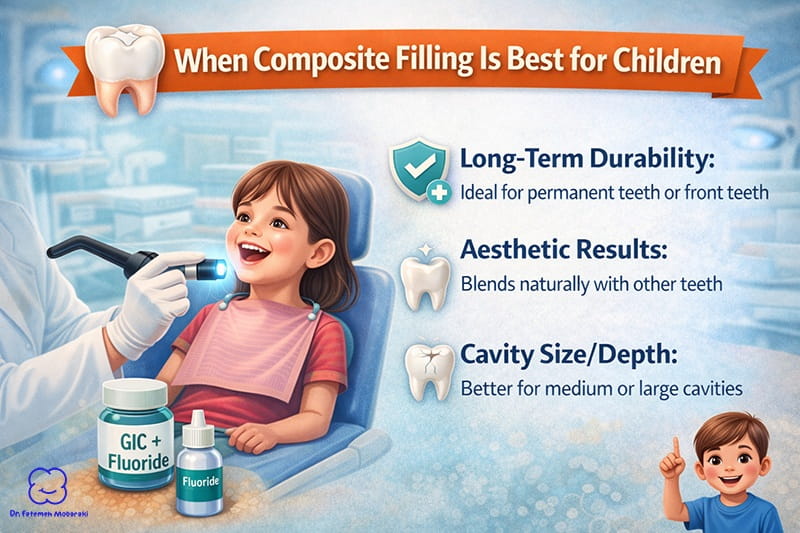
Composite fillings are preferred when strength and aesthetics are more important.
They are typically used for:
- Older children who can sit still during treatment
- Teeth that need to last longer
- Visible front teeth where appearance matters
Composite provides a more natural look and better resistance to chewing forces. However, it requires more time and precision during placement.
For children with deeper cavities or pain, evaluation may happen during visits related to emergency dental care for kids.
GIC vs Composite Filling Cost: What Should Parents Expect?
When comparing gic vs composite filling cost, GIC fillings are generally more affordable.
This is because:
- The procedure is quicker
- It requires fewer steps
- The material itself is less expensive
Composite fillings usually cost more due to:
- Advanced bonding techniques
- Longer chair time
- Higher material cost
However, cost should not be the only factor. A filling that lasts longer may reduce the need for future treatments, which can be more cost-effective in the long run.
GIC Filling vs Composite Durability: Which Lasts Longer?
In terms of GIC filling vs composite durability, composite fillings are clearly more durable.
Composite:
- Stronger under chewing pressure
- More resistant to wear
- Suitable for long-term restorations
GIC:
- Softer material
- More likely to wear down over time
- Better suited for temporary or low-stress areas
That said, durability is not always the top priority in baby teeth. Sometimes, a simpler and safer option is more appropriate.
Is One Safer Than the Other for Children?
Both materials are considered safe and widely used in pediatric dentistry.
GIC has the added benefit of fluoride release, which can support enamel protection. Composite, while not releasing fluoride, provides a stronger seal when properly placed.
The choice often depends more on the child’s behavior, cavity size, and clinical situation rather than safety concerns.
For a broader understanding, parents sometimes explore topics like Types of Dental Filling for kids to see how different materials compare.
How Do Pediatric Dentists Decide Between GIC and Composite?
Pediatric dentists consider several clinical factors when choosing between these materials:
- Age of the child
- Location of the cavity
- Size and depth of decay
- Child’s ability to cooperate
- Moisture control during treatment
For example, a small cavity in a toddler’s molar may be best treated with GIC, while a larger cavity in an older child’s tooth may benefit from composite.
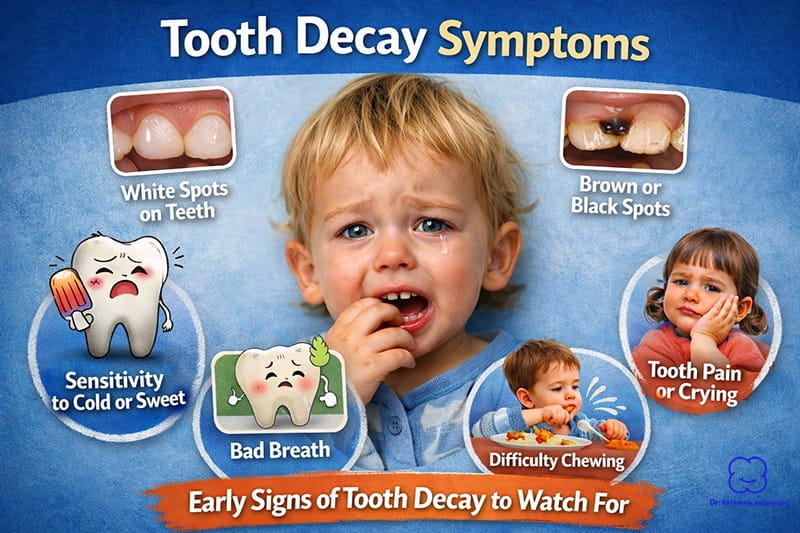
Parents who notice early signs of decay can learn more through resources like Tooth Decay Symptoms in Toddlers.
Why Do Some Pediatric Dentists Use Both Materials Together?
In some cases, dentists use a combination approach.
A layer of GIC may be placed first to release fluoride and protect the tooth, followed by a composite layer for strength and appearance. This technique is sometimes called a “sandwich restoration.”
It combines the benefits of both materials and is especially useful in moderate cavities.
How Does This Choice Affect Future Dental Treatment?
The type of filling used can influence how the tooth behaves over time.
- GIC fillings may need replacement sooner
- Composite fillings usually last longer but require maintenance
- Both options help preserve the tooth and avoid extraction
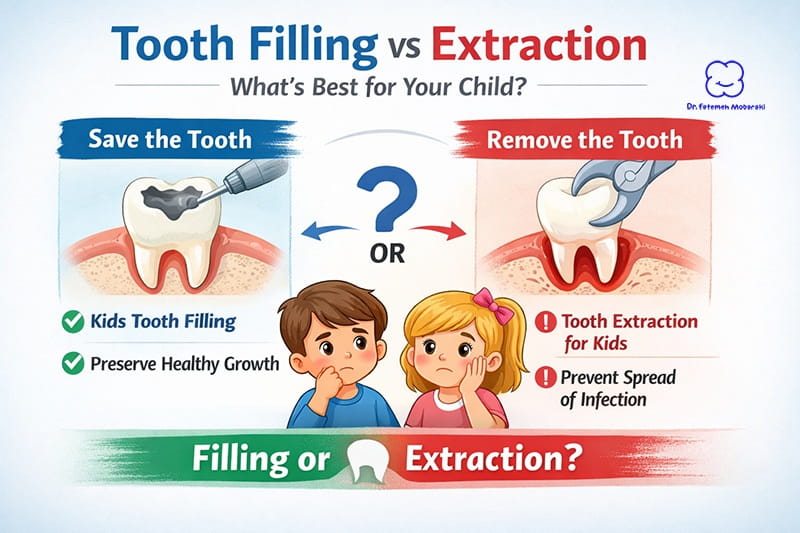
If decay progresses or the tooth cannot be saved, parents may eventually face decisions discussed in Tooth Filling vs Extraction.
Expert Insight
Clinical studies in pediatric dentistry show that glass ionomer materials perform well in primary teeth with lower biting forces, especially when fluoride release is beneficial. Composite restorations, however, demonstrate higher longevity in stress-bearing areas when proper isolation is achieved. The decision is therefore situational rather than universally fixed.
What Should Parents in Dubai Know?
In Dubai, pediatric dental care follows international standards, with access to both materials depending on the child’s needs.
Dentists aim to choose treatments that balance effectiveness, comfort, and long-term oral health. Clinics often prioritize minimally invasive approaches, especially for younger children.
This is why discussions about GIC vs composite filling are common during routine visits—each child’s case is unique.
Conclusion
The comparison of gic tooth filling vs composite filling is not about which material is universally better, but which is more appropriate for your child at a specific time.
- GIC is simple, fluoride-releasing, and suitable for younger children
- Composite is stronger, longer-lasting, and more aesthetic
- Both are safe and effective when used correctly
For parents, the most important factor is understanding that treatment decisions are individualized. With proper guidance, it becomes easier to choose an option that protects your child’s teeth while keeping the experience as comfortable as possible.