
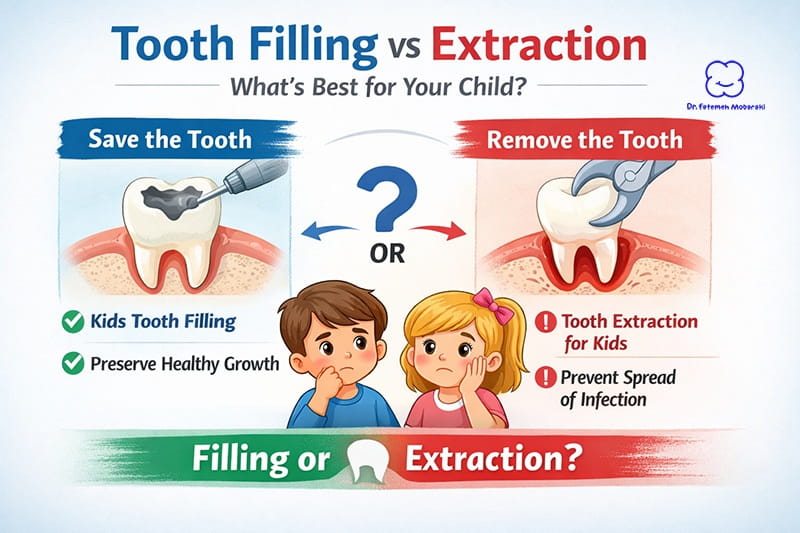
When a child has a cavity or a damaged tooth, one of the most common questions parents ask is whether a tooth filling vs extraction for kids is the better choice. The answer isn’t always straightforward. It depends on how deep the decay is, the condition of the tooth, and how it may affect your child’s future dental development.
As a pediatric dentist in palm jumeirah, dubai i often see parents worried about making the “right” decision. In reality, both options—saving the tooth with a filling or removing it—can be appropriate in different situations. Understanding the difference helps you feel more confident and less anxious when discussing treatment.
Tooth Filling vs Extraction: Which Option Is Better for Kids?
The short answer: saving the tooth is usually preferred whenever possible. A filling is less invasive and helps maintain normal function, while extraction is considered when the tooth cannot be restored safely.
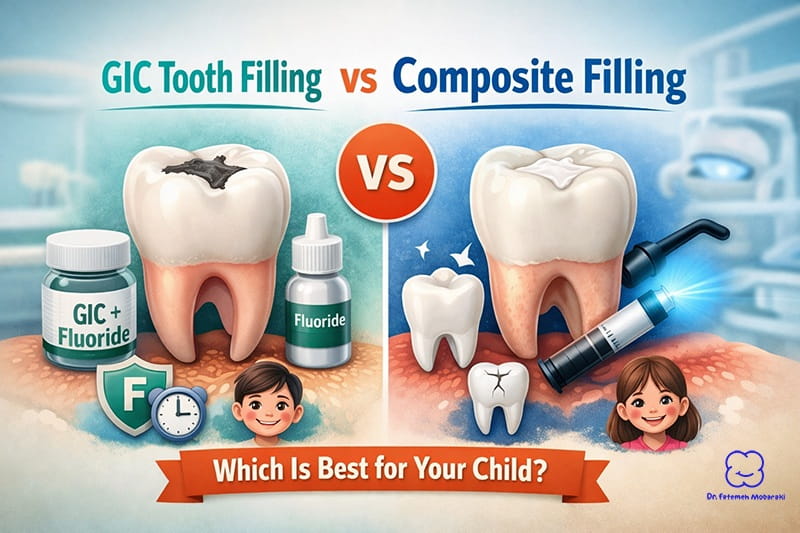
In a typical case of early or moderate decay, a kids tooth filling is enough to remove the damaged part and rebuild the tooth. This keeps chewing normal and preserves space for permanent teeth.
However, when decay is severe or the tooth is infected beyond repair, a tooth extraction for kids may be the safer option to prevent pain, swelling, or spread of infection.
When Can a Tooth Be Saved with a Filling?
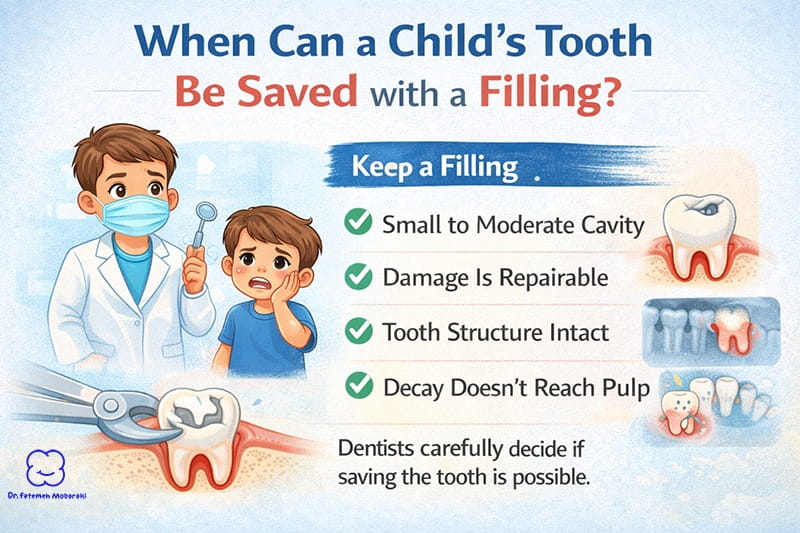
A tooth can usually be saved if the decay is limited to the outer layers—mainly the enamel and dentin.
Dentists recommend fillings when:
- The cavity is small to moderate
- There is no deep infection in the pulp
- The tooth structure is still strong enough
- The child is not experiencing severe or persistent pain
In these cases, removing decay and placing a filling restores the tooth effectively. Materials like composite resin are commonly used because they bond well and look natural. Parents who want to understand different materials and approaches can explore the Best cavity filling options for kids to see what works best for each situation.
Saving baby teeth is more important than many parents realize. These teeth guide permanent teeth into position and support proper speech and chewing.
When Is Extraction Necessary for a Child’s Tooth?
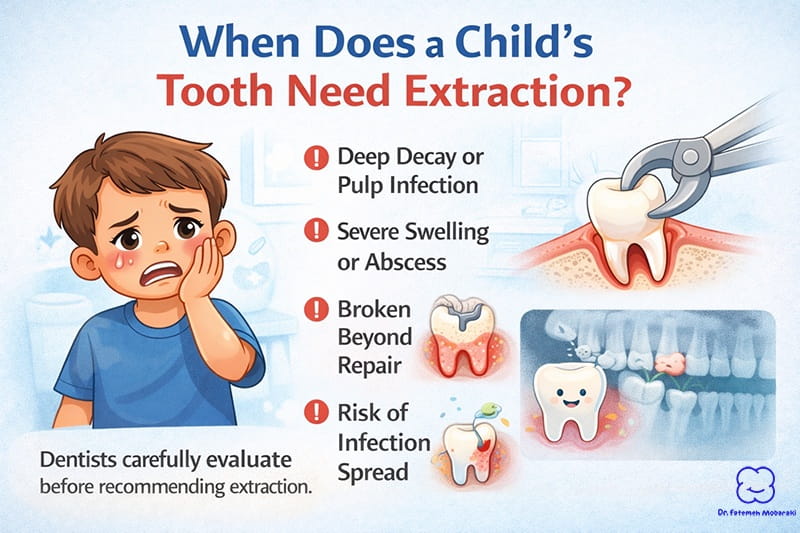
Extraction is recommended when the tooth cannot be safely restored or when keeping it may cause more harm.
Common reasons include:
- Deep decay reaching the nerve (pulp infection)
- Abscess or swelling around the tooth
- Severe structural damage (tooth is too broken)
- Risk of infection spreading to nearby teeth
In some of these cases, a kids root canal treatment may still be considered before deciding on extraction, especially if preserving the tooth is beneficial for spacing.
If extraction is unavoidable, dentists often plan for space maintenance to prevent future alignment issues. In some cases, understanding the different types of tooth extractions for kids can help parents feel more prepared for what the procedure involves.
What Is the Difference Between Pediatric Tooth Filling vs Extraction?
The difference between dental filling or tooth extraction for children comes down to preservation versus removal. In pediatric dentistry, the goal is always to keep the natural tooth whenever it is safe and functional. A filling restores the damaged area while maintaining the tooth’s role in chewing and spacing, whereas extraction removes the tooth entirely when it can no longer be saved.
- Filling: Removes decay and restores the tooth
- Extraction: Removes the entire tooth
A filling maintains:
- Natural chewing ability
- Proper spacing
- Jaw development
An extraction removes the problem but may:
- Affect spacing if not managed
- Require follow-up treatments like space maintainer
This is why dentists carefully evaluate each case before recommending removal.
Tooth Filling vs Extraction Pain: What Should Parents Expect?
Pain is one of the biggest concerns for parents, especially when comparing tooth filling vs extraction pain.
In general:
- Fillings involve minimal discomfort, often done under local anesthesia
- Extractions may feel more intense afterward, with soreness lasting a few days
Most children tolerate fillings very well, especially when the decay is treated early.
Extractions, while safe, may involve:
- Mild swelling
- Temporary discomfort when eating
- Need for soft foods during recovery
Proper pain management and aftercare instructions make both procedures manageable.
What Happens If a Damaged Baby Tooth Is Left Untreated?
Leaving a decayed tooth untreated can lead to more serious issues than either filling or extraction.
Possible consequences include:
- Infection spreading to nearby teeth
- Pain affecting eating and sleep
- Early tooth loss
- Impact on permanent tooth development
In some cases, untreated decay progresses to the point where a simple filling is no longer possible—making extraction the only option.
Early intervention gives more treatment choices and better outcomes.
Does Removing a Baby Tooth Affect Future Teeth?
Yes, it can—especially if the tooth is lost too early.
Baby teeth act as natural space holders. When one is removed prematurely:
- Adjacent teeth may shift
- Space for permanent teeth may reduce
- Crowding or misalignment can develop
This is why dentists often recommend space maintainers after certain extractions.
Whenever possible, preserving the natural tooth with a filling is preferred to avoid these complications.
How Do Dentists Decide Between Filling vs Extraction for Baby Teeth?
The decision is based on a combination of clinical and radiographic evaluation.
Dentists consider:
- Depth of decay (visible and on X-ray)
- Presence of infection or abscess
- Remaining tooth structure
- Child’s age and dental development stage
- Cooperation level of the child
A tooth that looks manageable from the outside may still require extraction if the infection has reached deeper tissues.
How Can Parents Prevent the Need for Fillings or Extractions?
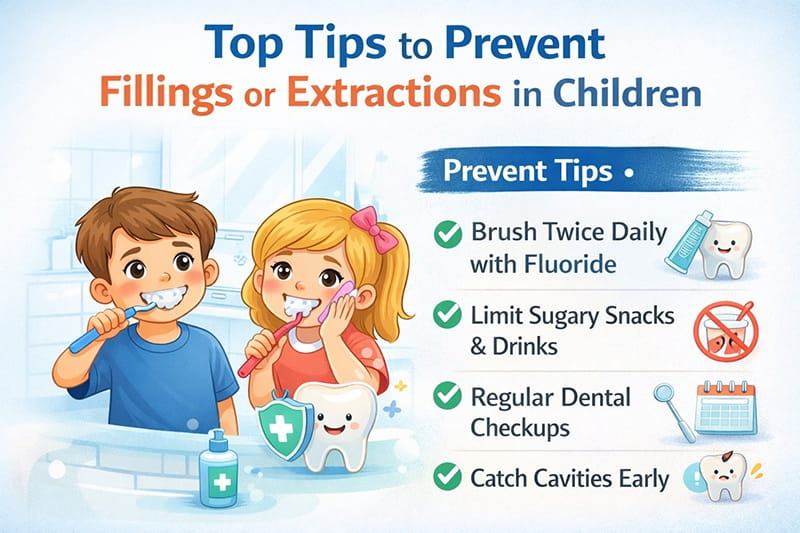
Prevention significantly reduces the likelihood of needing either treatment.
Simple habits make a big difference:
- Brushing twice daily with fluoride toothpaste
- Limiting sugary snacks and drinks
- Regular dental checkups
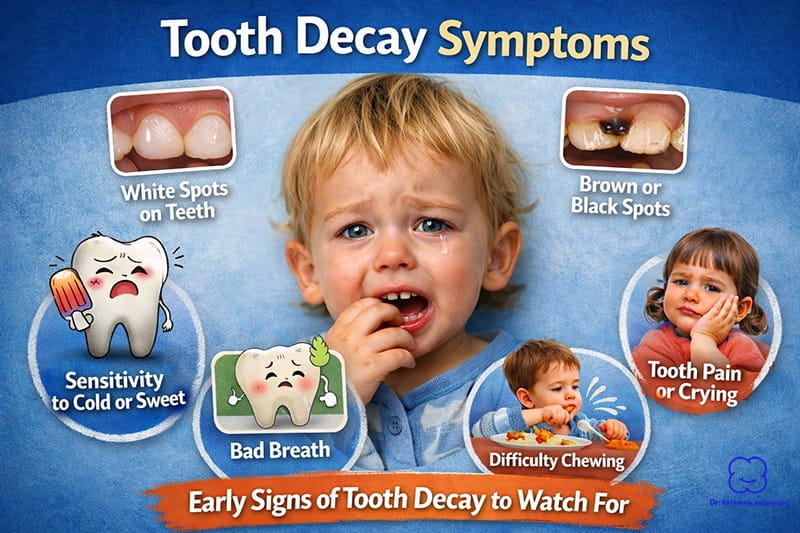
- Early detection of cavities
Many cases that require extraction start as small, manageable cavities. Early care often means a simple filling instead of a more complex procedure.
How Does Tooth Filling vs Crown Compare in Severe Cases?
When decay is more extensive but the tooth is still salvageable, a crown may be recommended instead of a simple filling. In discussions like tooth filling vs crown, the goal is still preservation.
Crowns:
- Cover and protect weakened teeth
- Are often used after pulp treatment
- Last longer in high-risk cases
This option sits between filling and extraction, offering a way to save the tooth even when damage is significant.
Expert Insight: Why Preservation Is Usually Preferred
In pediatric dentistry, preserving primary teeth whenever possible supports proper oral development. Clinical evidence shows that maintaining healthy primary teeth reduces the risk of malocclusion and functional problems later in life. However, extraction remains a necessary and safe option when infection control or structural integrity is compromised.
Pediatric Dental Care Context in Dubai
In Dubai, access to pediatric dental care allows for early diagnosis and minimally invasive treatments. Clinicians such as Dr. Fatemeh Mobaraki focus on preventive strategies and child-friendly approaches, helping families address issues before they become severe.
Parents often seek care when symptoms appear, but many conditions are easier to manage when identified early during routine visits.
Final Thoughts on Tooth Filling vs Extraction
Choosing between tooth filling vs extraction comes down to one key principle: preserve the tooth when it is safe to do so, remove it when necessary to protect overall health.
Fillings are less invasive, maintain normal development, and are usually preferred. Extractions, while sometimes unavoidable, are carefully planned to minimize long-term impact.
For parents, the most important step is early evaluation. The sooner a problem is identified, the more options are available—and the simpler the treatment tends to be.