
When a dentist tells a parent that a crown is recommended for a child’s tooth, the reaction is often immediate concern. Crowns sound permanent, adult, and intimidating. Parents usually wonder whether such a treatment is truly necessary for baby teeth and whether there are different options available. Understanding the types of dental crowns for kids helps remove much of that anxiety and replaces it with clarity.
Dental crowns in children are not chosen casually. They are selected to protect damaged teeth, restore normal chewing, and support healthy oral development during critical growth years. The goal is preservation, not over-treatment.
In pediatric care, crowns are commonly discussed alongside services such as dental crowns for kids, especially when cavities are extensive or a tooth has been weakened after treatment. Parents looking for a good kids dentist in jumeirah often encounter this recommendation as part of a long-term, prevention-focused approach rather than a one-time fix.
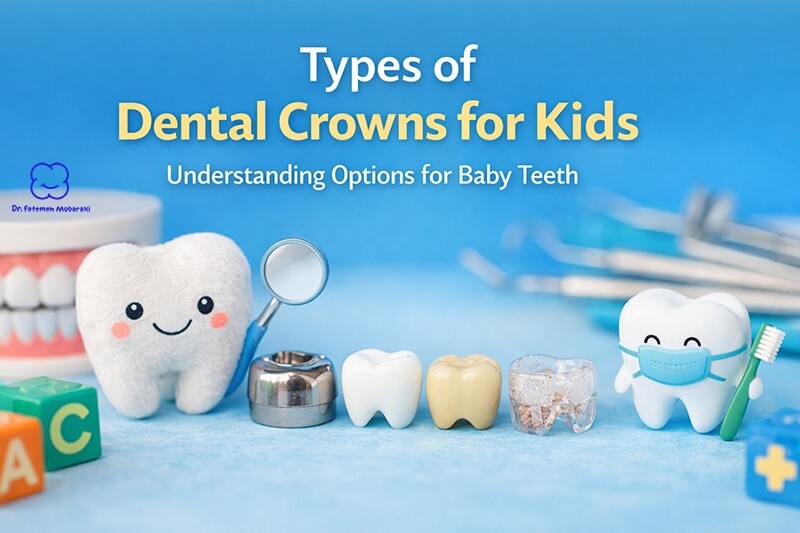
Parents often search for the different types of dental crowns for kids to understand which options are available and why one may be recommended over another.
What are dental crowns for children, and why are they used?
Dental crowns for kids are restorations that fully cover a damaged tooth, restoring its shape, strength, and ability to function. They are most commonly used when decay affects a large portion of the tooth or when a tooth has been weakened after nerve treatment.
From a clinical perspective, crowns are chosen when other options no longer provide predictable protection. Among the different dental crown types used in pediatric care, full-coverage restorations consistently offer better long-term stability for compromised primary teeth.
Primary teeth play a critical role beyond chewing. They help children speak clearly, guide jaw development, and hold space for permanent teeth. When a tooth is badly compromised, a crown helps maintain these functions until the tooth naturally exfoliates.
Knowing the types of dental crowns for kids helps parents see how treatment choices differ based on tooth location, extent of damage, and developmental timing.
What are the main types of dental crowns for kids?
There are several recognized types of dental crowns for kids, each with specific indications. Dentists choose among different types of pediatric crowns to balance durability, appearance, and long-term oral health.
In pediatric dentistry, these decisions are guided by well-established dental crown types that are adapted specifically for children. Understanding the main types of pediatric crowns allows parents to follow the clinical reasoning behind each recommendation.
1. Stainless steel crowns
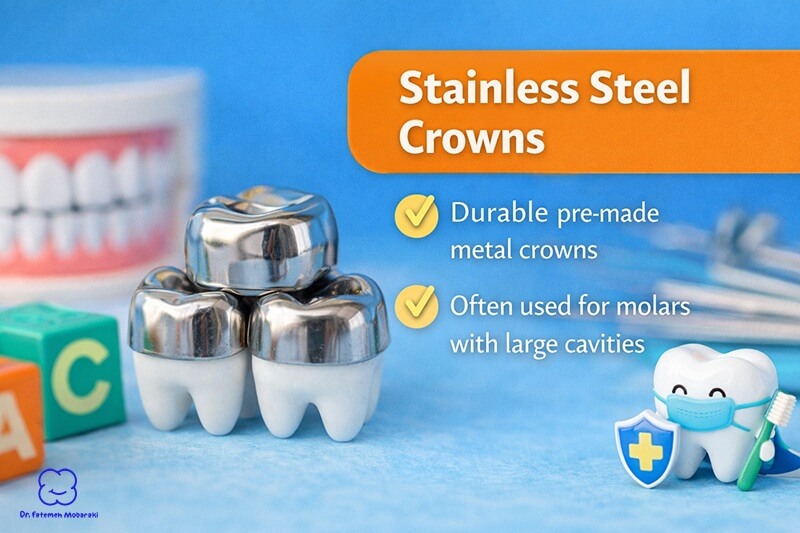
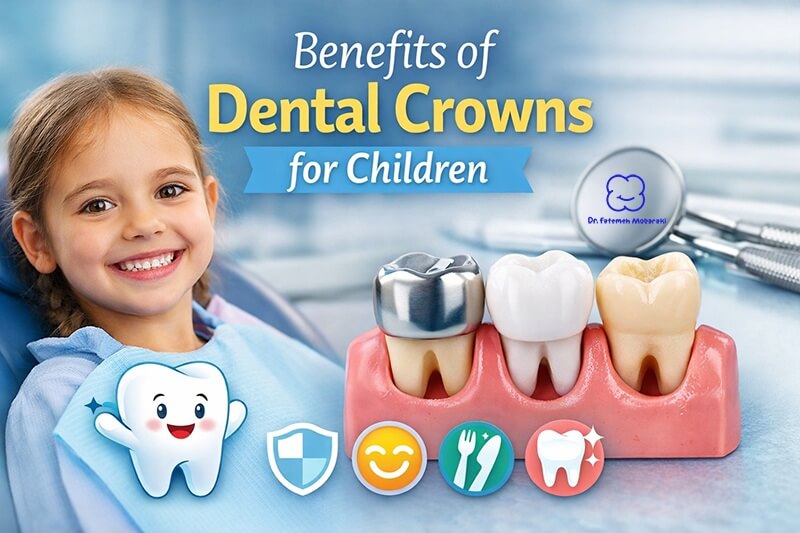
Stainless steel crowns are the most widely used type in pediatric dentistry. They are silver-colored metal caps that are preformed and adjusted to fit a child’s tooth.
These crowns are often recommended for back teeth (molars), where chewing pressure is strongest. They are especially effective when a tooth has large cavities or has undergone pulp therapy.
Their advantages include durability, long-term success, and cost-effectiveness. While their metallic appearance is noticeable, they are placed on teeth that are less visible when a child smiles.
2. White or tooth-colored crowns
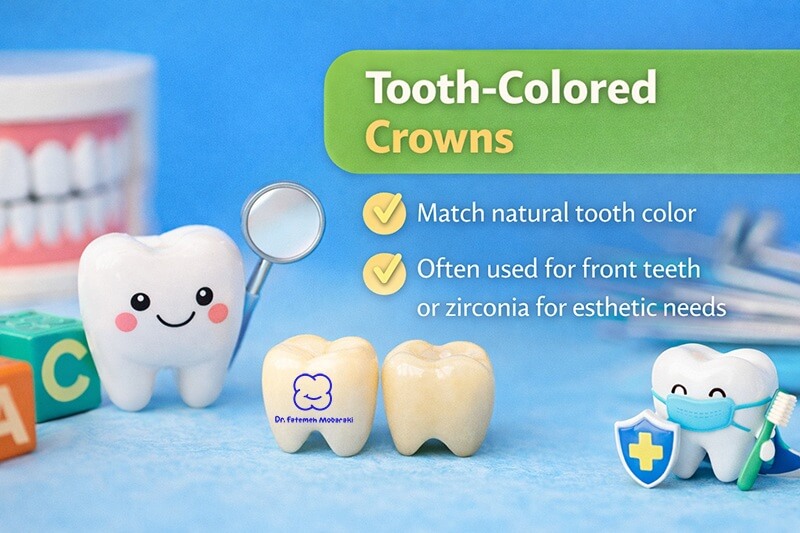
White crowns are often chosen for front teeth or for parents who prefer a more natural appearance. These crowns can be made from composite resin or ceramic materials.
They blend with the natural tooth color and are commonly used when aesthetics are a priority. However, they may not be as durable as stainless steel crowns, particularly in children who grind their teeth or have strong bite forces.
Tooth-colored crowns require careful case selection to ensure longevity and proper function.
3. Zirconia crowns for children
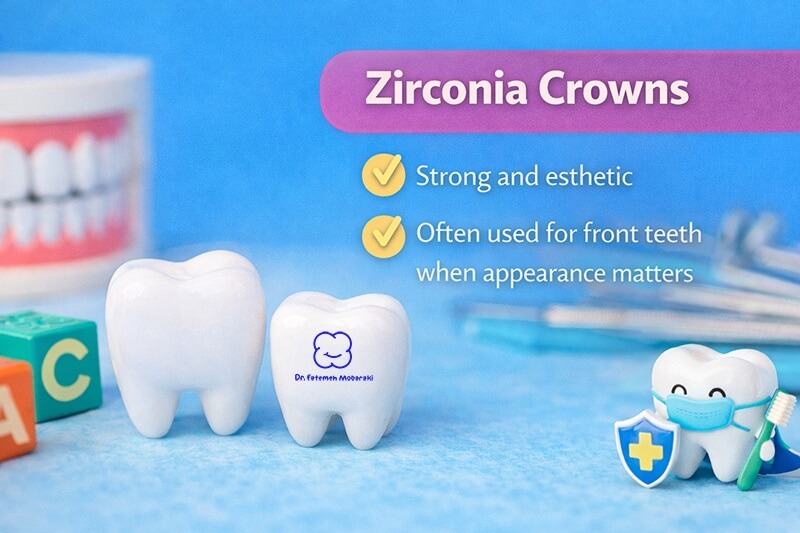
Zirconia crowns have gained popularity as an aesthetic yet strong option. They are white, metal-free, and closely resemble natural teeth.
Among the types of crowns for children’s teeth, zirconia crowns offer excellent appearance and biocompatibility. They are often used for front teeth and sometimes for molars when conditions allow.
These crowns are more technique-sensitive to place and usually cost more. Their smooth surface can help reduce plaque accumulation, which is a consideration for oral hygiene.
Among the different types of dental crowns for kids, this option is chosen when long-term durability is the primary concern.
4. Resin strip crowns
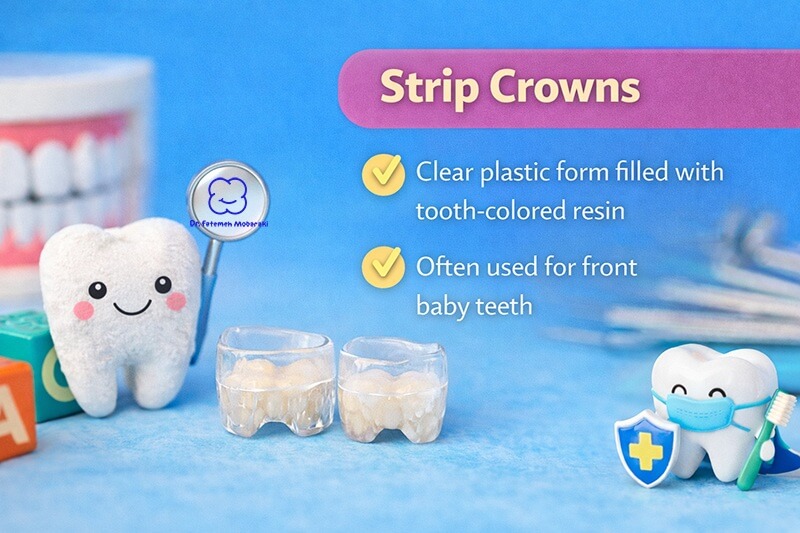
Resin strip crowns are commonly used for front baby teeth affected by decay. A clear plastic form is filled with tooth-colored resin and shaped directly on the tooth, then the plastic shell is removed.
They provide a natural look but rely heavily on good moisture control during placement. For very young or uncooperative children, this can be challenging.
Strip crowns work best when decay is moderate and the tooth structure is still sufficient to support the restoration.
How does a dentist decide which crown is best for a child?
Dentists do not select crowns based on appearance alone. The decision is based on clinical findings, the child’s dental history, and long-term oral health considerations.
Key factors include how much tooth structure remains, whether the tooth has nerve involvement, and how long the tooth is expected to stay in the mouth. A back molar with extensive decay usually requires a stronger crown than a front tooth with cosmetic concerns.
Child behavior and tolerance for treatment also matter. In some situations, procedures may be combined with general anesthesia for children’s dental work to ensure safety and comfort, especially when multiple crowns are needed.
Are crowns safe for baby teeth?
Yes, crowns are considered safe and well-established in pediatric dentistry. They are used to protect teeth that would otherwise be lost prematurely due to decay or fracture.
Early tooth loss can lead to spacing problems, tooth misalignment in children, and difficulty chewing. Crowns help prevent these complications by maintaining the tooth until its natural exfoliation.
Materials used in pediatric crowns are selected for durability and compatibility with children’s oral tissues. When placed correctly, crowns support normal growth and function.
How long do pediatric dental crowns last?
Pediatric crowns are designed to last until the baby tooth naturally falls out. For most children, this means several years of function.
Stainless steel crowns, in particular, have a high success rate and rarely need replacement. Tooth-colored and zirconia crowns can also last well when placed under appropriate conditions and maintained with good oral hygiene.
Regular dental check-ups help ensure that crowns remain intact and that the surrounding gum tissue stays healthy.
What is the procedure like for a child?
The crown procedure is typically straightforward. After numbing the area, the dentist removes decay and shapes the tooth. The crown is then fitted and secured in place.
Children often adapt quickly after treatment, returning to normal eating habits within a short period. In urgent situations, such as trauma or severe pain, treatment may be combined with emergency dental care for kids to prevent complications and relieve discomfort promptly.
For parents who want a clearer picture of what happens before, during, and after treatment, the related article Child Dental Crown Procedure offers a detailed, step-by-step explanation in plain language.
Do crowns require special care at home?
Crowns do not require special cleaning tools, but consistent oral hygiene is essential. Brushing twice daily with fluoride toothpaste and flossing help protect both crowned and natural teeth.
Sticky foods and excessive sugar can increase the risk of decay around the edges of crowns. Balanced nutrition, including attention to factors discussed in topics like vitamins for baby teeth, supports overall oral health.
Parents should monitor habits such as chewing on hard objects, which can damage crowns over time.
Expert insight: what research shows about pediatric crowns
Clinical studies consistently show that crowns outperform large fillings in primary teeth with extensive decay. Stainless steel crowns, in particular, demonstrate higher survival rates and fewer complications over time.
This evidence supports the use of crowns as a preventive strategy rather than a last resort, aligning with modern pediatric dentistry principles focused on long-term outcomes.
How pediatric dental care in Dubai approaches crown treatment
Pediatric dental care in Dubai often reflects a preventive and child-centered philosophy. Treatment planning considers not only the tooth but also the child’s comfort, family expectations, and cultural context.
In clinics such as the one led by Dr. Fatemeh Mobaraki in Dubai, crown selection is guided by clinical need and developmental timing, ensuring that interventions are appropriate and proportional.
Why crowns are sometimes preferred over fillings in children
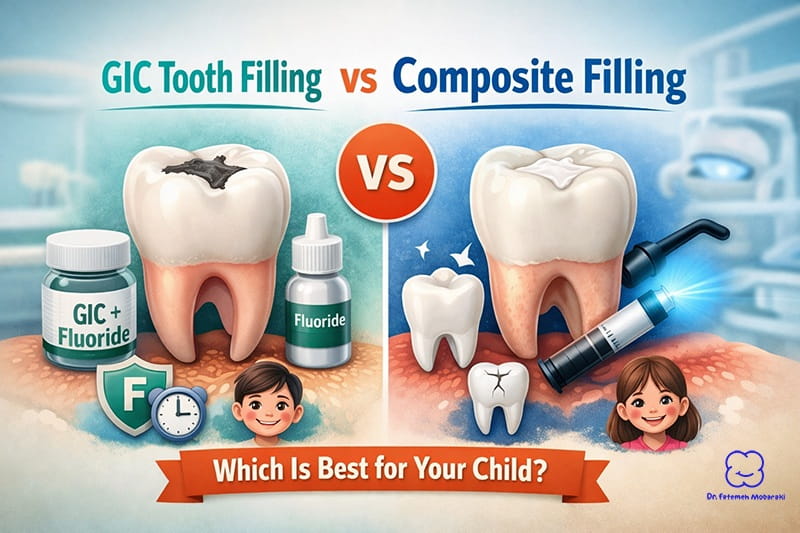
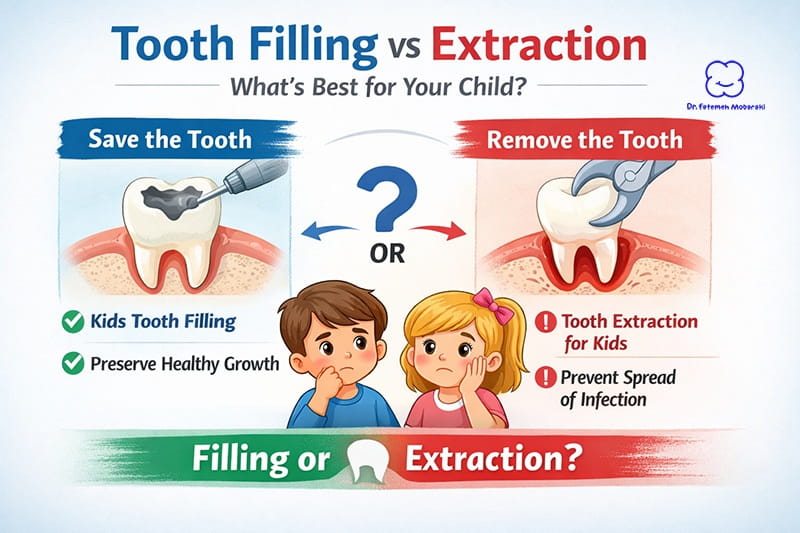
Large fillings in baby teeth can fail over time because primary teeth have thinner enamel and dentin. Crowns provide full coverage, reducing the risk of recurrent decay and fracture.
Crowns provide full coverage, reducing the risk of future breakdown. Parents who want a deeper explanation of this decision often ask why a crown is chosen instead of a filling. If you want to explore the clinical and developmental reasoning in more detail, the related article Why Put Crowns on Baby Teeth provides additional insight.
Key takeaways for parents
Understanding the types of dental crowns for kids helps parents make informed, confident decisions. Crowns are not an aggressive treatment; they are a protective measure designed to support healthy development.
Different crown types serve different purposes, from strength to aesthetics. When chosen carefully and maintained properly, crowns allow children to eat, speak, and smile comfortably throughout their early years.
A calm, informed approach reassures children and parents alike, reinforcing trust in pediatric dental care without unnecessary intervention.