
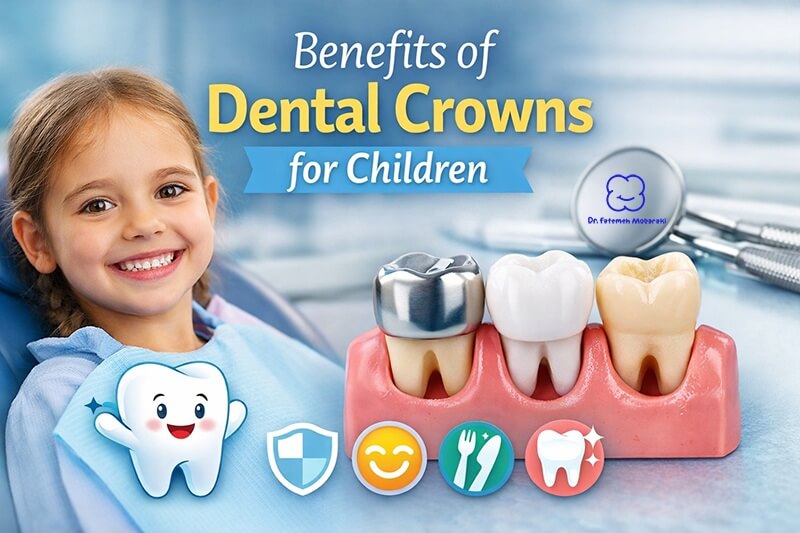
Hearing that a child may need a crown can worry many parents. Crowns often sound like something meant for adults, yet they are commonly used to protect and restore young teeth when damage is too extensive for a simple filling. Understanding the benefits of dental crowns helps parents see that the goal is not just repair, but long-term protection of their child’s oral health, comfort, and development.
Baby teeth, also called primary teeth, guide speech, chewing, and the proper eruption of permanent teeth. When one of these teeth is severely decayed, fractured, or weakened, a crown can play a key role in preserving function and preventing further problems.
What Are the Main Benefits of Dental Crowns in Children?
The benefits of dental crowns in children focus on protection, durability, and maintaining normal oral development. A crown fully covers the visible part of a damaged tooth, acting like a protective shell.
First, crowns restore strength. A tooth weakened by deep cavities or large restorations can easily break. In these situations, a dental crown for kids provides full coverage that reduces the risk of fracture during everyday chewing.
Second, crowns help control infection. When decay has reached deep layers of the tooth, sealing it with a crown after treatment lowers the chance of bacteria re-entering and causing further complications.
Another important aspect of the benefits of a crown is comfort. A protected tooth is less sensitive to temperature and pressure, which can make eating easier and reduce pain.
Finally, crowns support normal spacing. Keeping a treated baby tooth in place helps guide permanent teeth into their correct positions.
Why Might a Child Need a Tooth Crown Instead of a Filling?
A filling repairs part of a tooth, while a crown covers it entirely. When too much natural structure is lost, a filling alone may not hold up.
The benefits of a tooth crown become clear when decay is extensive, when a tooth has had pulp therapy, or when enamel is weak. In these situations, the remaining tooth walls may be thin and prone to breaking. A crown distributes chewing forces more evenly, reducing stress on fragile areas.
Children with enamel defects or a history of large cavities often benefit from crowns because they provide longer-lasting protection compared with repeated large fillings.
Protection and Strength: A Major Advantage of Dental Crowns
One of the most recognized advantages of dental crowns is their ability to reinforce a compromised tooth. Baby teeth are smaller and have thinner enamel than adult teeth, which means damage can progress quickly.
A crown acts as a barrier. It shields the tooth from further decay, mechanical wear, and fracture. This is particularly important for back teeth, which handle the most chewing pressure.
By strengthening the tooth, crowns often reduce the need for repeated dental repairs, which can be stressful for children.
How Do Crowns Help Prevent Pain and Infection?
When decay reaches the inner part of the tooth, inflammation and infection can develop. Treatment may involve removing infected tissue, sometimes through procedures such as a pulpotomy. After this, a crown seals and protects the tooth.
Among the benefits of teeth crown use in these cases is the reduced likelihood of bacteria leaking back into the treated area. This lowers the risk of recurring pain or swelling.
A well-sealed crown also limits sensitivity. Children who previously avoided chewing on one side due to discomfort often return to normal eating habits after treatment.
Supporting Normal Chewing and Speech
Healthy baby teeth are important for clear speech and proper chewing patterns. Missing or painful teeth can change how a child bites and talks.
The benefits of dental crowns include restoring the tooth’s shape and size, which helps maintain balanced chewing. This supports good nutrition and jaw development.
Front teeth are also important for certain speech sounds. When these teeth are severely damaged, crowns can help preserve function during critical speech development years.
Aesthetic Benefits of Tooth-Colored Crowns
Appearance can matter even for young children, especially as they grow older and become more aware of their smiles.
Tooth-colored options, such as zirconia or composite strip crowns, offer natural-looking results. The benefits of a crown in visible areas include improved appearance without compromising strength.
Feeling comfortable with their smile can support a child’s confidence, particularly in social and school settings.
Different Types of Dental Crowns for Kids and Their Individual Benefits
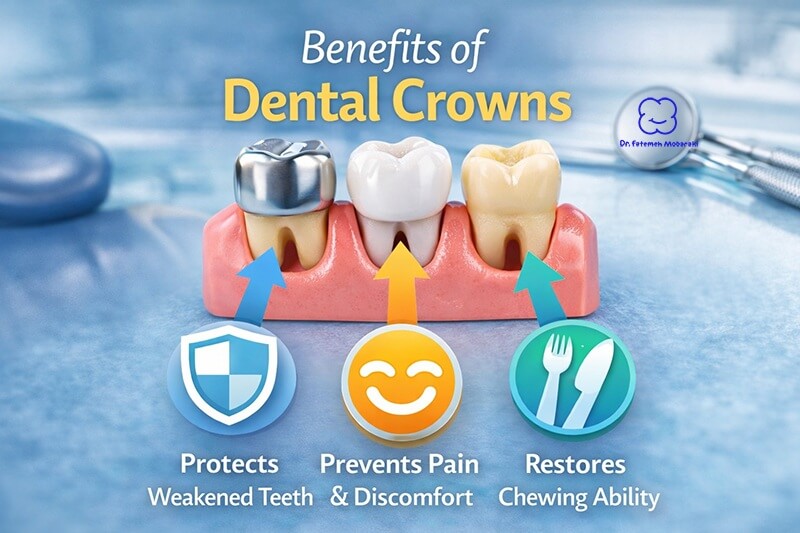
Several crown types are used in dental crowns for kids, each with specific advantages depending on the tooth and situation.
Stainless steel crowns are often used on back baby teeth. They are durable, cost-effective, and reliable under heavy chewing forces. One of the key benefits of dental crowns of this type is longevity until the tooth naturally falls out.
Zirconia crowns provide strong, tooth-colored coverage. Their smooth surface may reduce plaque buildup, and they are often chosen for front or visible teeth.
Strip crowns are composite-based and can be shaped for a natural appearance. They are useful when aesthetics are a priority, though technique sensitivity is higher.
Parents who want deeper comparisons may find it helpful to explore resources discussing Types of Dental Crowns for Kids for more detail.
How Do Crowns Help Maintain Space for Permanent Teeth?
Primary teeth act as placeholders. If a damaged tooth is lost too early, neighboring teeth can drift, leading to crowding or alignment issues later.
One of the lesser-discussed benefits of a tooth crown is space preservation. By keeping the treated baby tooth in place until its natural shedding time, the crown helps maintain proper spacing for the adult tooth underneath.
This can reduce the likelihood of complex orthodontic problems in the future.
Crowns After Pulp Treatment: Why They Matter
When the inner pulp of a tooth is affected, treatment may be required to remove infected tissue. After such procedures, the remaining tooth structure is more fragile.
In these cases, the advantages of dental crowns include protecting the tooth from fracture and re-infection. Without full coverage, treated teeth are at higher risk of breaking.
Parents interested in understanding how deep tooth infections are managed can learn more through a comprehensive root canal treatment guide for parents, which explains related procedures in a child-friendly context.
Expert Perspective
Clinical studies in pediatric dentistry show that full-coverage restorations, such as crowns, have higher long-term success rates than large multi-surface fillings in primary molars with extensive decay. Full coverage reduces restoration failure and recurrent decay, supporting stable oral health during early development.
Pediatric Dental Care in Dubai: Local Considerations
In Dubai, access to specialized pediatric dentistry services means children can receive treatment tailored to their age, behavior, and dental development. Environmental factors, diet patterns, and high sugar consumption can increase cavity risk, making preventive and protective treatments especially relevant.
Families seeking a pediatric dentist in dubai often learn that crowns are not a last resort, but a preventive measure to avoid repeated dental emergencies and discomfort.
Parents often look for what they describe as the best kids dental clinic, but what truly matters is finding a pediatric dental team that focuses on prevention, gentle techniques, and age-appropriate care.
Some children who are anxious or very young may benefit from approaches such as pediatric sedation dentistry to ensure treatment is carried out safely and comfortably.
When a Crown Is Part of a Larger Treatment Plan
Crowns are sometimes placed after other procedures, including kids root canal treatment, where preserving the tooth is still possible and beneficial.
In these situations, the benefits of dental crowns extend beyond the single tooth. They support overall oral balance, reduce future complications, and help maintain normal daily activities like eating and speaking.
At a clinic providing care through a qualified pediatric dentist in dubai, comprehensive planning ensures crowns are used appropriately and conservatively. Dr. Mobaraki emphasizes preservation of natural tooth structure whenever possible, using crowns when they provide clear protective value.
Key Takeaways for Parents
The benefits of dental crowns in children go far beyond covering a damaged tooth. Crowns restore strength, reduce pain, limit infection risk, and help maintain normal chewing, speech, and tooth spacing. They can also improve appearance and confidence, particularly when tooth-colored options are used.
While the idea of a crown may initially sound serious, in pediatric care it is often a practical, preventive step. When used appropriately, crowns help baby teeth do their job until nature takes its course, supporting a child’s comfort and healthy development along the way.