
When parents think about their child’s dental health, brushing, fluoride, and dental visits usually come to mind first. However, long before a toothbrush ever touches a baby’s mouth, nutrition is already shaping how their teeth develop. Understanding vitamins for baby teeth helps parents make informed decisions that support stronger enamel, healthier gums, and proper tooth development from infancy through childhood.
Many parents in Dubai ask their pediatric dentist whether vitamins or supplements are necessary for their child’s teeth, especially during the early years. The answer is rarely simple, but it is reassuring: most dental development depends on balanced nutrition rather than special products or supplements.
This guide explains which vitamins matter, how they support baby and children’s teeth, and when professional advice may be needed—without exaggeration, fear, or marketing claims.
What Are Vitamins for Baby Teeth and Why Do They Matter?
When we talk about vitamins for baby teeth, we are not referring to a single supplement or formula. Instead, the term describes a group of essential nutrients that support the natural development of teeth, gums, and jawbones during early childhood.
Baby teeth begin forming beneath the gums months before birth. During pregnancy and early childhood, the body uses vitamins and minerals to:
- Form tooth enamel and dentin
- Support jawbone growth
- Maintain healthy gum tissue
- Strengthen developing roots
If key nutrients are lacking during these stages, teeth may erupt later, develop weaker enamel, or become more vulnerable to decay.
Understanding Baby Teeth Development
Primary teeth usually start appearing around six months of age and continue erupting until about age three. These teeth are not temporary in function, even though they eventually fall out. They play an essential role in:
- Proper chewing and nutrition
- Speech development
- Guiding permanent teeth into position
This is why the importance of baby teeth is emphasized so strongly in pediatric dentistry. Healthy baby teeth set the foundation for healthier permanent teeth later in life.
Best Vitamins for Children’s Teeth at Different Ages
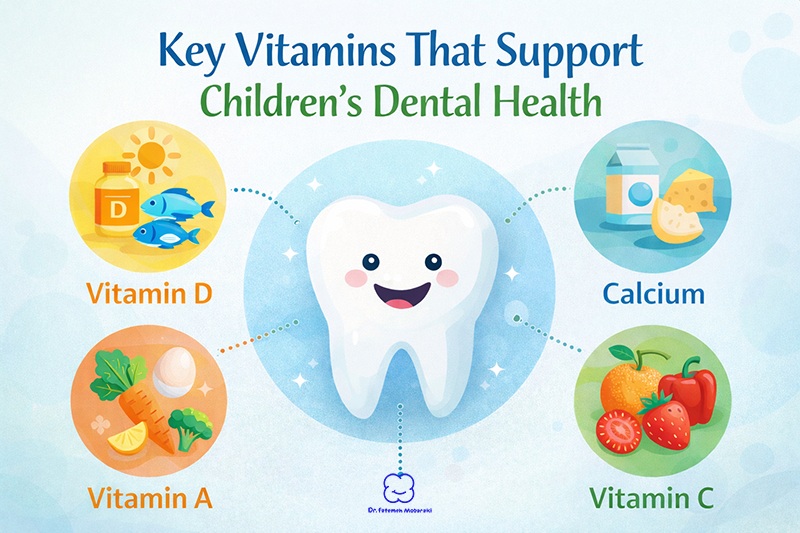
Different vitamins support different aspects of oral development. Below are the most important nutrients involved in building and maintaining healthy baby and children’s teeth.
Vitamin D: Supporting Enamel and Bone Strength
Vitamin D allows the body to absorb calcium and phosphorus—two minerals essential for strong teeth.
How it supports teeth
- Helps mineralize enamel
- Supports jawbone development
- Reduces the risk of weak or underdeveloped teeth
In sunny regions like Dubai, children may still have low vitamin D levels due to indoor lifestyles or limited sun exposure.
Calcium: The Structural Foundation of Teeth
Calcium is one of the main components of teeth and bones.
How it supports teeth
- Builds strong tooth structure
- Supports healthy jaw growth
- Works closely with vitamin D
Most children obtain calcium through milk, yogurt, cheese, or fortified alternatives.
Vitamin A: Enamel Formation and Oral Tissues
Vitamin A contributes to normal enamel development and supports the tissues inside the mouth.
How it supports oral health
- Maintains healthy gums
- Supports saliva production
- Helps protect oral tissues
Vitamin A is typically obtained through vegetables, dairy products, and eggs.
Vitamin C: Gum Health and Healing
Vitamin C is essential for healthy gums and connective tissue.
How it supports oral health
- Strengthens gum tissue
- Supports healing
- Helps reduce gum inflammation
A diet rich in fruits and vegetables usually provides sufficient vitamin C for children.
B Vitamins: Supporting Oral Tissue Health
B vitamins help maintain healthy oral tissues and contribute to overall growth and development.
How they support teeth
- Maintain healthy oral lining
- Support energy metabolism
- Contribute indirectly to gum health
Vitamins for Children’s Teeth vs. Supplements: What Parents Should Know
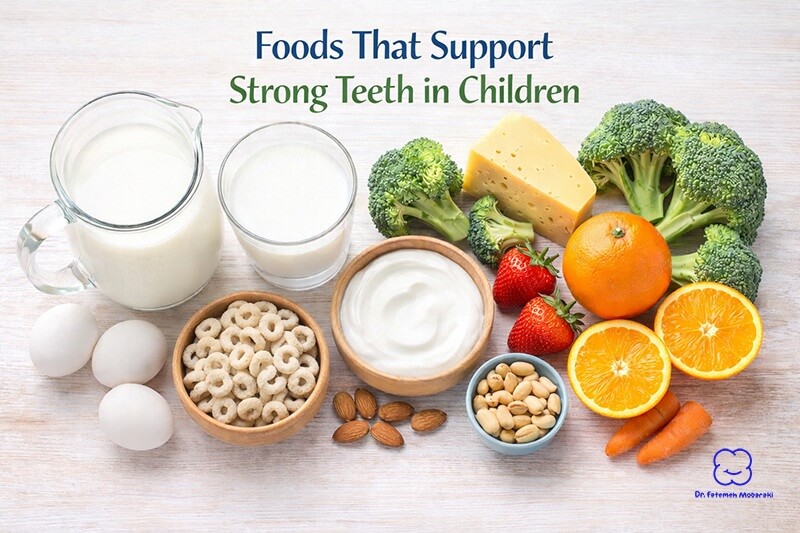
Parents often ask whether supplements are necessary to provide the best vitamins for children’s teeth. In most healthy children, food is the preferred and sufficient source.
When food is usually enough
- A balanced, varied diet
- Normal growth patterns
- No diagnosed deficiencies
When supplements may be considered
- Confirmed vitamin D deficiency
- Dietary restrictions or allergies
- Medical conditions affecting absorption
Any supplementation should be discussed with a healthcare provider or pediatric dental professional.
Can Vitamins Prevent Cavities?
Vitamins support healthy tooth development, but they do not prevent cavities on their own.
Cavity prevention depends on:
- Daily brushing and flossing
- Balanced nutrition
- Professional dental care
- Preventive measures such as fluoride treatment for kids
Even children with good nutrition can still develop cavities without proper oral hygiene and regular checkups.
Practical Nutrition Tips for Parents
Supporting dental health through nutrition does not need to be complicated.
Helpful daily habits
- Offer balanced meals with calcium-rich foods
- Limit sugary snacks and drinks
- Encourage water between meals
- Avoid frequent snacking
Healthy nutrition works best when combined with strong children’s oral hygiene habits and routine dental care.
When to Seek Professional Dental Advice
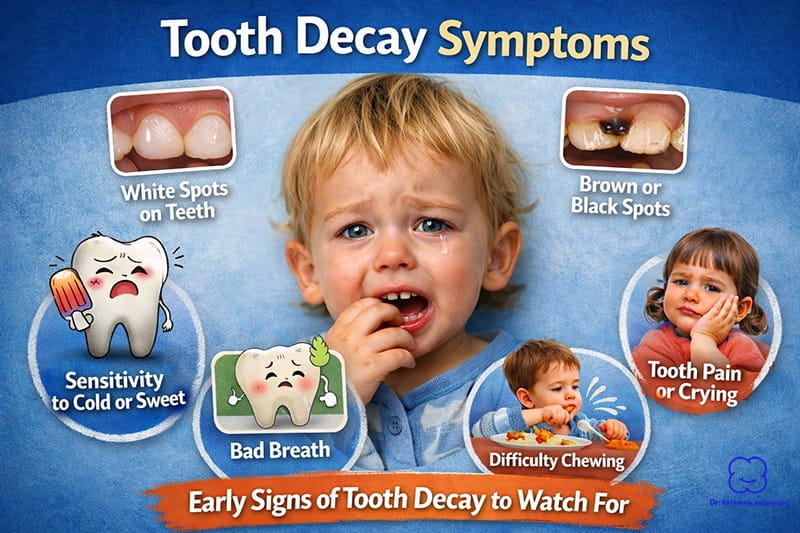
Parents should consider professional evaluation if they notice:
- Delayed tooth eruption
- White or brown spots on teeth
- Frequent cavities
- Bleeding or swollen gums
- Concerns about eating or nutrition
In such cases, consulting a trusted pediatric dentist in palm jumeirah allows early identification of potential issues and personalized guidance.
Expert Reassurance for Parents
From a clinical perspective, dental health is rarely determined by vitamins alone. Pediatric dentists often see children with excellent diets who still need preventive care, as well as children with limited diets who maintain healthy teeth.
At Dr. Fatemeh Mobaraki Pediatric Dental Clinic, the approach to pediatric oral health typically focuses on:
- Early monitoring
- Preventive care
- Parent education
- Individualized treatment planning
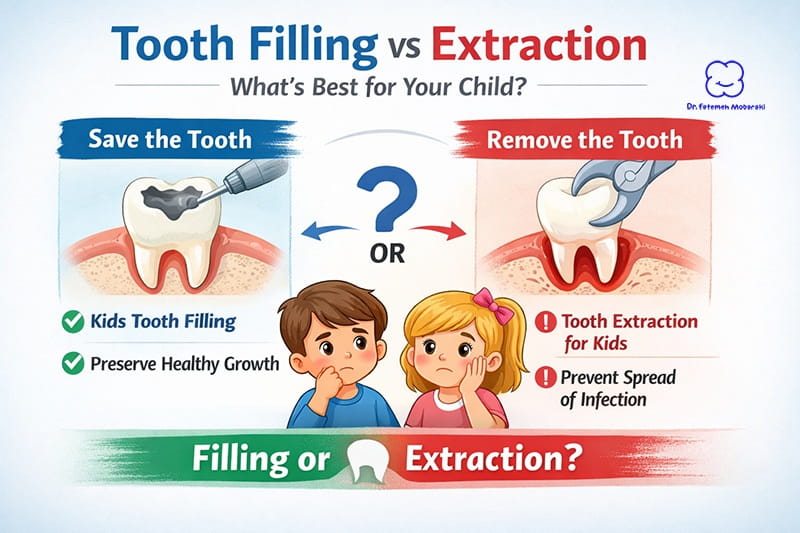
When dental problems occur, conservative treatments such as tooth filling for children are often sufficient. In more advanced cases, dental crowns for children may be recommended to protect weakened teeth. For children with anxiety or special needs, options like child sedation dentistry are considered carefully and only when appropriate. In urgent situations, timely emergency dental care for children helps prevent complications.
Final Thoughts for Parents
Understanding vitamins for baby teeth helps parents focus on what truly matters: balanced nutrition, healthy habits, and early preventive care. Strong teeth are built through a combination of diet, daily oral hygiene, and professional guidance—not through supplements alone.
By supporting your child’s nutrition and oral care from the beginning, you are laying the groundwork for a healthier smile that lasts well beyond childhood.
Frequently Asked Questions (FAQs)
Do vitamins for baby teeth really make a difference?
Yes, they support proper tooth development, but they do not replace brushing, fluoride, or dental visits.
Should babies take vitamin supplements for their teeth?
Most babies receive adequate nutrients from breast milk or formula. Supplements should only be used if recommended by a healthcare professional.
Can low vitamin D affect baby teeth?
Low vitamin D levels may be associated with weaker enamel and delayed tooth eruption.
Are gummy vitamins safe for children’s teeth?
Many gummy vitamins contain sugar and can stick to teeth. If used, they should be given with meals and followed by brushing.
Can vitamins fix existing tooth decay?
No. Vitamins support development and maintenance, but existing decay requires dental treatment.