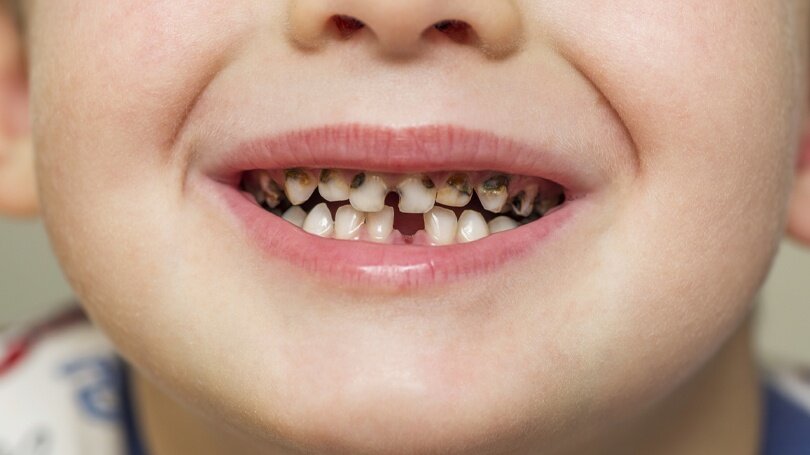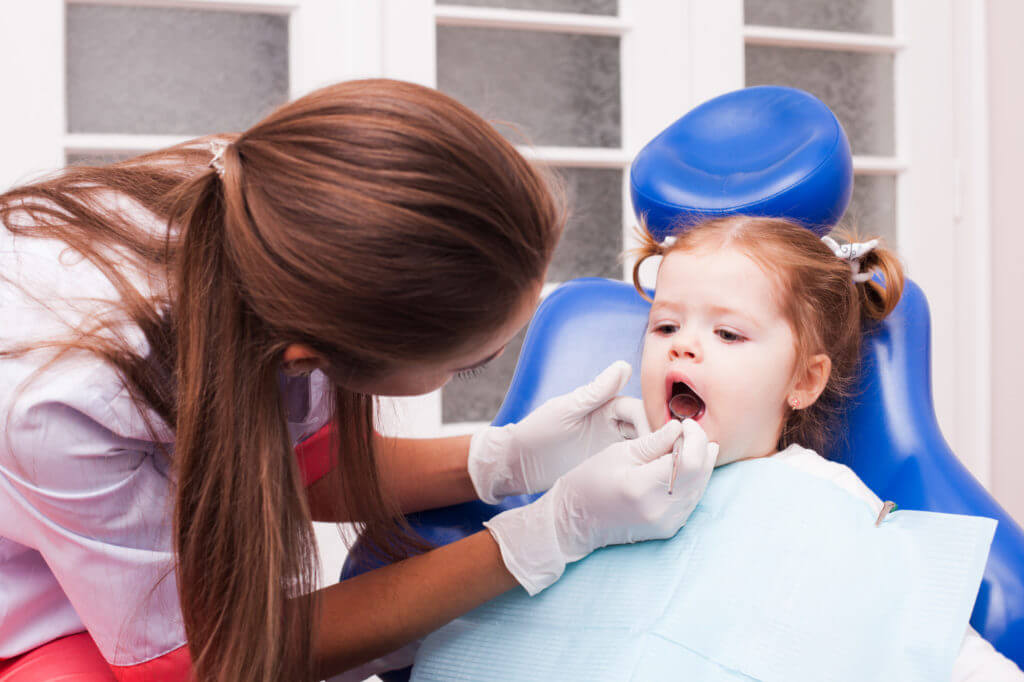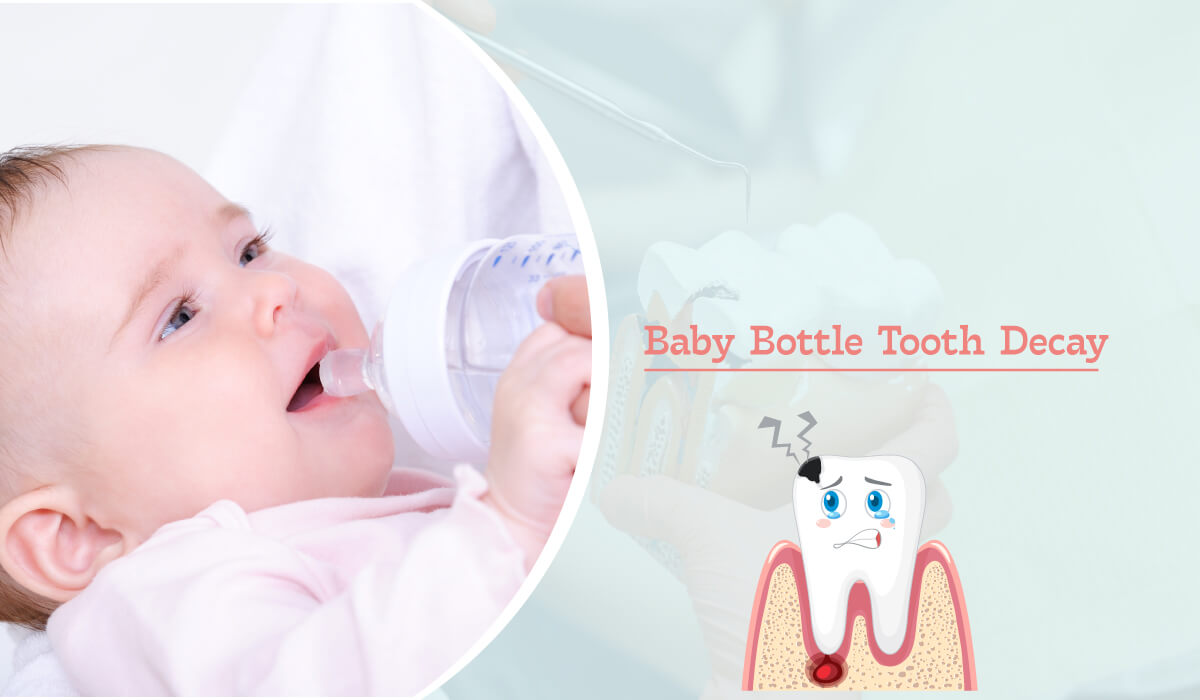

When a child loses a baby tooth earlier than expected, parents often focus on the visible gap and what it might mean for future teeth. To protect that space and guide proper dental development, dentists may recommend a space maintainer. While this small appliance plays a critical role in preserving alignment, many parents are surprised to learn that dietary choices directly affect how well a space maintainer functions.
Understanding foods to avoid with a space maintainer is essential for preventing damage, discomfort, and unnecessary dental visits. This guide explains why certain foods pose a risk, how eating with a dental space maintainer should be managed, and what parents can do to protect their child’s oral health—clearly, calmly, and without alarm.
What Is a Space Maintainer and Why Food Matters
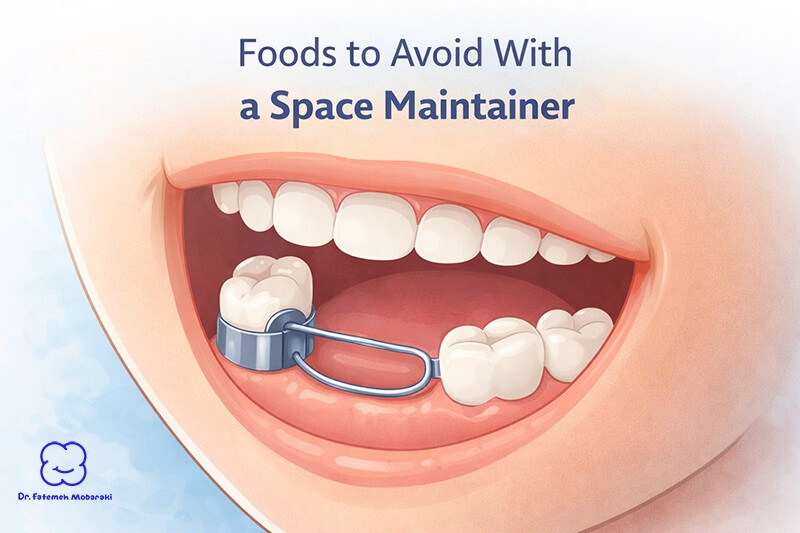
A space maintainer is a dental appliance used to hold open the space left behind when a baby tooth is lost too early. This allows the permanent tooth to erupt into the correct position rather than drifting or becoming blocked.
In pediatric dentistry, a space maintainer for kids is commonly recommended when a baby tooth is lost too early, helping preserve proper spacing until the permanent tooth is ready to come in.
Different appliances are used depending on a child’s age, tooth position, and oral development, and understanding the Types of Space Maintainers can help parents better follow care and dietary guidelines.
These appliances can be fixed or removable and are commonly recommended by Dr. Fatemeh Mobaraki Pediatric Dental Clinic when early tooth loss may affect alignment or bite development.
Although space maintainers are designed to be durable, they are not immune to damage. Certain foods can bend metal components, loosen cement, trap debris, or cause breakage—especially when chewing habits have not yet adapted.
For families working with a pediatric dentist in Dubai, food guidance is a routine but crucial part of treatment success.
How Eating With a Dental Space Maintainer Affects Oral Health
Eating with a dental space maintainer requires small but important adjustments. Children often chew without realizing where pressure is being applied, especially in the early weeks after placement.
The main risks associated with food choices include:
- Loosening or breaking the appliance
- Increased plaque buildup around bands or wires
- Gum irritation and inflammation
- Higher risk of cavities near the appliance
This is why dentists emphasize not only oral hygiene, but also dietary awareness, particularly in younger children.
Foods to Avoid With a Space Maintainer
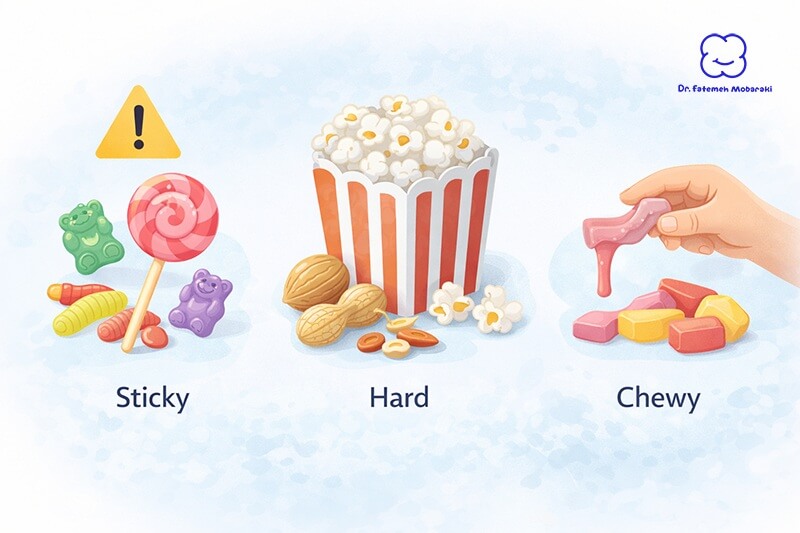
Not all foods affect a space maintainer in the same way, and understanding which textures and consistencies pose the greatest risk can help parents make safer everyday choices for their child.
Sticky Foods and Space Maintainers: A Risky Combination
Sticky foods are the most common cause of space maintainer damage. They adhere to metal and acrylic surfaces and are difficult to remove, even with thorough brushing.
Examples include:
- Chewing gum
- Caramel and toffee
- Gummy candies
- Fruit leathers and sticky dried fruits
These foods can pull on the appliance while chewing, increasing the chance it will loosen or detach. Sticky residue also encourages bacterial growth, raising cavity risk around the appliance.
Hard and Crunchy Foods That Can Damage the Appliance
Hard foods can bend wires or dislodge bands, especially when bitten directly.
Foods not allowed with a space maintainer often include:
- Ice cubes
- Hard candy
- Nuts and seeds
- Popcorn kernels
- Hard bread crusts
Even healthy foods, such as raw carrots or apples, can be problematic if not prepared properly. Cutting them into small, bite-sized pieces is usually safer.
Chewy and Tough Foods to Limit or Avoid
Chewy textures require prolonged force, which places repeated stress on the appliance.
These include:
- Bagels and chewy rolls
- Tough meats
- Licorice
- Pizza crusts
While occasional exposure may not cause immediate damage, frequent consumption increases the likelihood of appliance distortion over time.
Foods That Are Safer Alternatives
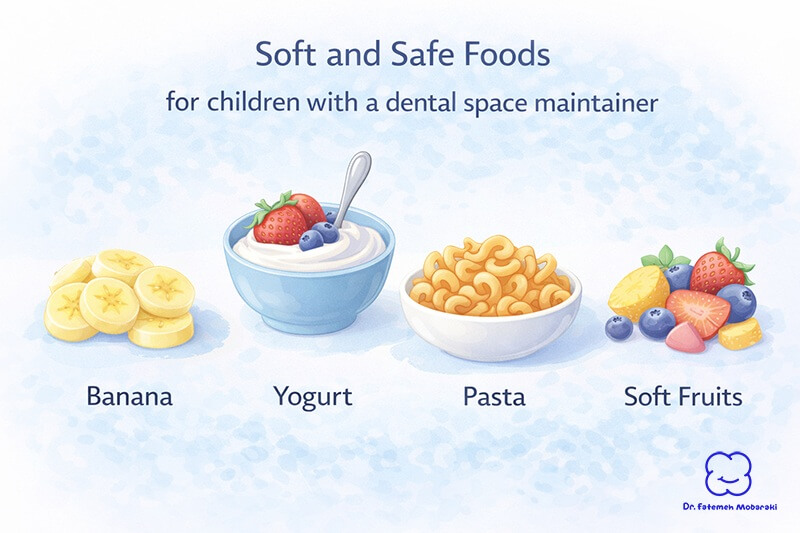
Parents often worry that dietary restrictions will be overwhelming, but many child-friendly options are safe.
Generally safer choices include:
- Soft fruits (bananas, ripe pears, berries)
- Yogurt and cheese
- Cooked vegetables
- Pasta, rice, and soft grains
- Scrambled eggs and tender proteins
Choosing softer textures supports both comfort and appliance longevity.
Why Food Restrictions Are Especially Important in the First Weeks
The first few weeks after placement are when children are most likely to damage a space maintainer. During this period:
- Chewing habits are still adapting
- The appliance has not yet fully “settled”
- Children may test its limits unconsciously
Dentists often recommend being extra cautious during this adjustment phase before slowly reintroducing a broader range of foods—excluding high-risk items.
Hygiene, Food Debris, and Space Maintainers
Food choices do not only affect mechanical stability. Certain foods increase the likelihood of debris becoming trapped around the appliance.
Poor food selection can lead to:
- Plaque accumulation
- Gum redness or swelling
- Bad breath
- Early decay near bands
Parents should supervise brushing and encourage rinsing after meals, particularly when eating foods that tend to cling or crumble.
When to Contact a Dentist About Food-Related Issues
Parents should seek professional advice if they notice:
- The appliance feels loose
- A wire appears bent or broken
- The child reports pain while chewing
- Food is consistently getting stuck
Early intervention prevents more complex problems and ensures the appliance continues to do its job.
Children who already show signs of crowding or spacing issues may also be monitored more closely, especially when combined with Early orthodontic treatment planning.
How Food Choices Support Long-Term Alignment
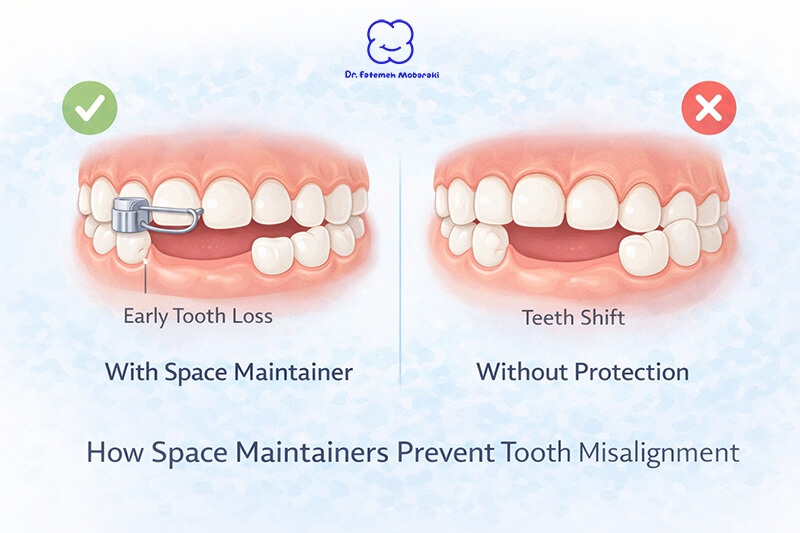
Space maintainers are often part of a broader strategy to prevent future misalignment. Improper care—including ignoring dietary guidelines—can reduce their effectiveness and increase the likelihood of later orthodontic issues.
When a space maintainer is damaged or removed too early, nearby teeth may shift into the open space, increasing the risk of Tooth Misalignment in Children as permanent teeth begin to erupt.
Expert Reassurance for Parents
It is normal for children to make occasional mistakes with food choices. One incident rarely causes serious harm. What matters most is consistent awareness, gentle supervision, and open communication with the dental team.
Clinics that focus on child-centered care, such as those serving families across Dubai, aim to educate parents so that treatment feels manageable—not restrictive or stressful.
Final Thoughts for Parents
Knowing which foods to avoid with a space maintainer empowers parents to support their child’s dental development confidently. These guidelines are not meant to restrict enjoyment, but to protect an important appliance during a critical stage of growth.
With thoughtful food choices, good hygiene, and professional guidance, space maintainers can quietly and effectively do their job—helping permanent teeth emerge exactly where they should.
Frequently Asked Questions
Can my child eat sweets with a space maintainer?
Soft sweets eaten occasionally may be acceptable, but sticky or hard candies should be avoided due to the risk of damage and decay.
Are fruits safe with a space maintainer?
Yes, as long as they are soft or cut into small pieces. Whole hard fruits should not be bitten directly.
What happens if the space maintainer breaks from food?
The dentist will assess whether it can be repaired or needs replacement. Prompt evaluation is important.
Is popcorn completely off-limits?
Popcorn kernels are a common cause of damage and should generally be avoided.
How long do food restrictions last?
Most restrictions remain for as long as the appliance is in place, though children often adapt quickly.
Can my child eat normally at school?
Yes, with guidance. Packing safe foods and explaining limitations to caregivers helps prevent problems.