
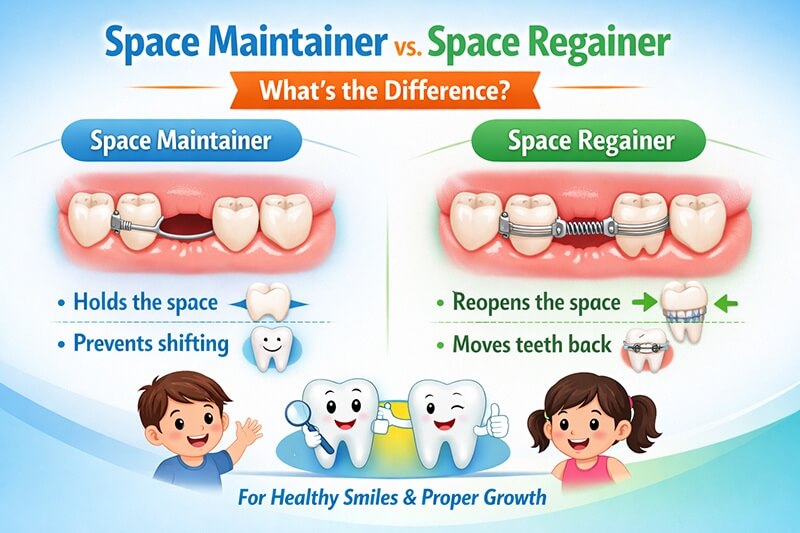
When a child loses a baby tooth earlier than expected, many parents are told they may need something to hold the space. Others hear the word regainer and wonder why a space suddenly needs to be reopened. The difference between these two appliances is not always explained clearly, yet the timing matters more than most families realize.
Understanding space maintainer vs space regainer helps parents make informed decisions about their child’s developing smile—without fear, pressure, or confusion.
Why does early loss of baby teeth affect future alignment?
When a baby tooth is lost too early, nearby teeth naturally begin to shift into the empty space within weeks or months. This movement is not intentional or harmful by itself—it is simply how growing mouths behave.
The problem arises because that space was reserved for a permanent tooth that has not erupted yet. Once neighboring teeth drift, the permanent tooth may erupt crooked, rotated, or remain partially blocked beneath the gums. This is one of the most common early contributors to crowding later in childhood.
Parents often first learn about this risk during a routine visit to an affordable pediatric dentist dubai, when X-rays show that the permanent tooth is still developing beneath the bone.
What is a space maintainer, and when is it used?
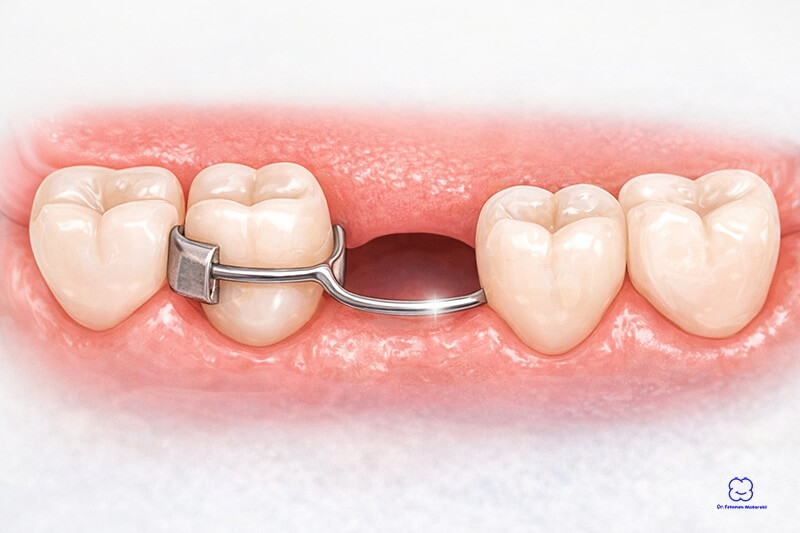
A space maintainer is a small dental appliance placed after a baby tooth is lost prematurely to preserve the gap until the permanent tooth erupts.
It does not move teeth.
It does not straighten teeth.
It simply prevents surrounding teeth from collapsing into the empty space.
Space maintainers are most effective when placed soon after tooth loss, before any drifting has occurred. They are commonly recommended after early extractions caused by decay, trauma, or infection.
In many cases, a space maintainer for baby teeth is a quiet, preventive step that avoids more complex orthodontic treatment later. Children usually adapt quickly, and once the permanent tooth begins to erupt, the appliance is removed.
What is a space regainer, and why is it sometimes needed instead?
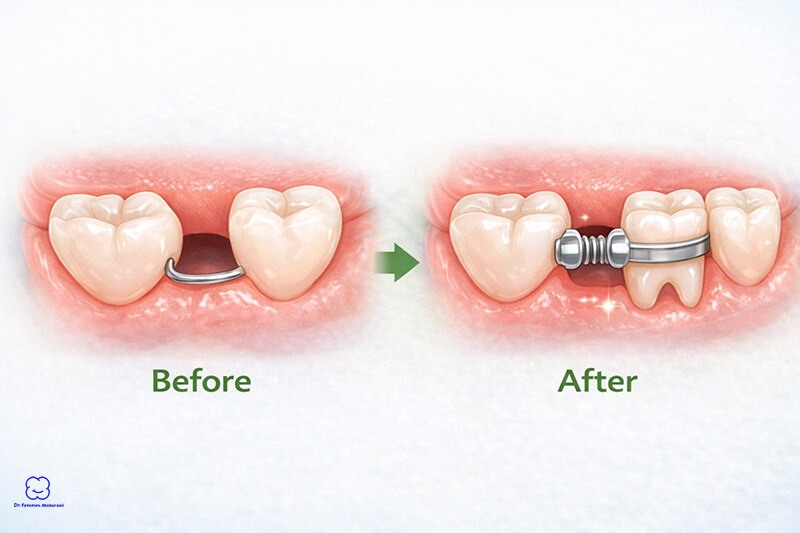
A space regainer is used when the space has already been lost due to tooth movement after early tooth loss.
Unlike a space maintainer, a regainer actively applies gentle pressure to move teeth back toward their original position. This creates enough room for the permanent tooth to erupt properly.
Space regainers are typically recommended when:
- A baby tooth was lost months earlier
- Teeth have already shifted
- X-rays show insufficient room for the permanent tooth
Because they involve controlled tooth movement, space regainers require closer monitoring and careful timing. They are often considered an early form of interceptive orthodontic care.
How do dentists decide between a space maintainer and a space regainer?
Dentists do not choose between these appliances arbitrarily. The decision is based on timing, tooth movement, and the stage of dental development. When families ask about the space maintainer and space regainer difference, they are usually trying to understand whether the space from a lost baby tooth is still intact or whether nearby teeth have already shifted.
Dentists evaluate:
- How long ago the tooth was lost
- Whether neighboring teeth have shifted
- The eruption stage of the permanent tooth
- Jaw growth and bite development
If the space is still open, maintaining it is often enough. If the space has narrowed, regaining it becomes necessary. This assessment is made using clinical examination and dental imaging, not just visual appearance.
This distinction explains why two children with similar tooth loss may receive different recommendations.
Is one option better than the other?
Neither option is “better” in general. Each serves a specific purpose.
A space maintainer is preventive and passive.
A space regainer is corrective and active.
Using a regainer when a maintainer would have been sufficient often means the window for prevention was missed. This is why early dental monitoring plays such an important role in children’s oral development.
Can space maintainers or regainers replace orthodontic treatment later?
These appliances do not replace orthodontics, but they can significantly reduce the severity of future alignment problems.
By preserving or restoring space early, they help guide teeth into a more natural position. In some children, this minimizes crowding enough to simplify or shorten later orthodontic treatment. This early phase is often coordinated with broader kids orthodontics planning as the child grows.
What happens if neither is used when needed?
Without intervention, space loss may lead to:
- Crowding of permanent teeth
- Impacted or delayed eruption
- Midline shifts
- Asymmetrical bites
These changes can be subtle at first and become more difficult to correct over time. Early intervention focuses on guidance, not aggressive correction.
What Is the Difference Between a Space Maintainer vs Space Regainer?
After understanding how each appliance works, the difference between space maintainer and space regainer becomes much clearer.
| Feature | Space Maintainer | Space Regainer |
|---|---|---|
| Purpose | Keeps existing space open | Reopens lost space |
| Tooth movement | No | Yes |
| Timing | Immediately after early tooth loss | After space has already closed |
| Complexity | Preventive | Corrective |
| Monitoring | Routine | Closer follow-up required |
| Role | Protects eruption pathway | Restores eruption pathway |
Both appliances are temporary, child-specific, and tailored to growth stage.
What types of space maintainers exist?
Several designs exist depending on the tooth location and number of missing teeth. Parents who want a deeper overview can explore Types of Space Maintainers, which explains fixed and removable options in more detail.
The choice is always individualized and based on comfort, cooperation level, and dental anatomy.
Expert insight: why timing matters more than appliance type
From a clinical standpoint, the most critical factor is when space is addressed, not how. Research consistently shows that early space management reduces the likelihood of complex orthodontic issues later. According to pediatric dentistry principles, preserving eruption pathways supports healthier alignment and jaw development during growth. This preventive approach aligns with evidence-based pediatric dental care standards and long-term oral health outcomes.
How this is approached in pediatric dental care in Dubai
In growing cities like Dubai, pediatric dental care often emphasizes early monitoring due to diverse dietary habits, early childhood decay patterns, and varied eruption timelines. Regular follow-ups allow clinicians to identify space issues early—often before parents notice visible changes.
At Dr. Mobaraki’s pediatric dental clinic, space management decisions are made conservatively, focusing on growth guidance rather than early correction.
Final thoughts for parents
The discussion around space maintainer vs space regainer is not about choosing a device—it is about protecting a child’s natural dental development at the right moment.
Some children only need space preserved.
Others need space gently restored.
Both approaches are temporary, thoughtful, and aimed at helping permanent teeth erupt where they belong. When parents understand the reasoning behind these recommendations, decisions feel calmer, clearer, and more collaborative.
Early awareness is not about intervention—it is about prevention, timing, and trust in the process of growth.