
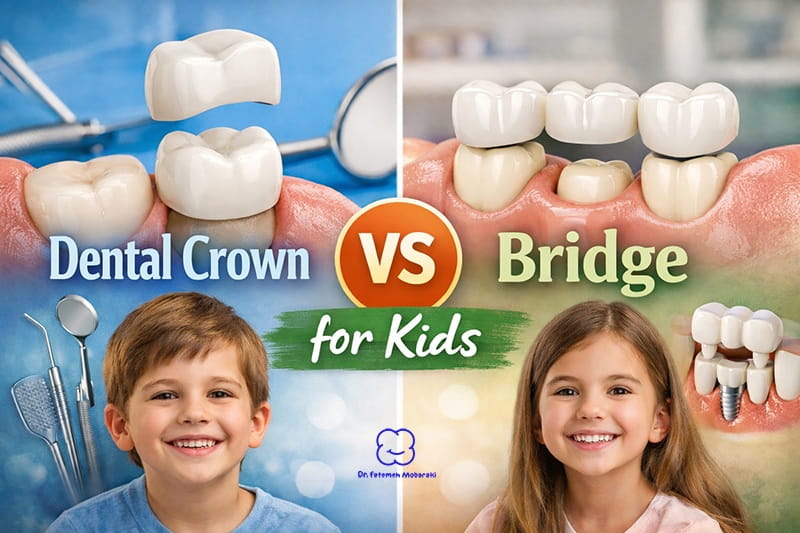
When a child’s tooth is damaged or missing, parents are often faced with an important decision: dental crown vs bridge. Understanding the difference can help you choose a solution that protects your child’s oral health both now and in the future.
In simple terms, a crown protects a tooth that is still present, while a bridge replaces a tooth that has been lost. For families visiting a childrens dental clinic, this distinction matters because children’s teeth are still developing and require a more conservative approach.
Dental Crown vs Bridge: Which One Is Better for Your Child?
When comparing dental crown vs bridge, the better option depends on the condition of the tooth. A crown is usually recommended if the tooth is still there but weakened, while a bridge is used only when a tooth is missing.
In pediatric dentistry, crowns are often the preferred option because they preserve the natural tooth and support proper growth. Treatments like dental crowns for children are commonly used to restore strength and function without affecting surrounding teeth.
What Is the Difference Between Dental Crown and Bridge?
The difference between dental crown and bridge comes down to function and structure.
A dental crown is a custom-made cap that covers a damaged tooth, restoring its shape, strength, and appearance. It is commonly used for teeth affected by cavities, fractures, or enamel weakness.
A dental bridge replaces one or more missing teeth by using neighboring teeth as support. It includes an artificial tooth (pontic) anchored to adjacent teeth, known as abutments.
In children, bridges are used less frequently because they require modifying healthy teeth, which is not always ideal during growth.
When Does a Child Need a Dental Crown?
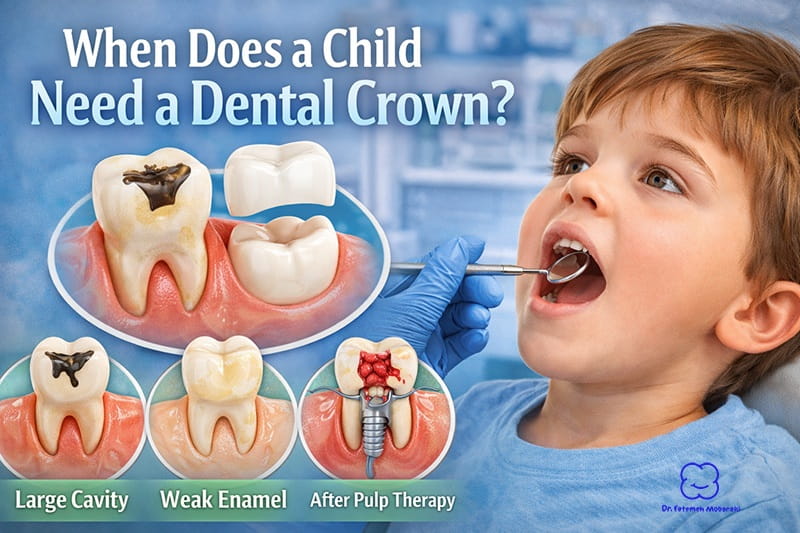
A dental crown is recommended when a tooth cannot be restored with a simple filling.
Common situations include:
- Large cavities affecting most of the tooth
- Weak enamel (such as enamel hypoplasia)
- Teeth treated with pulp therapy or root canal treatment
- Fractured or worn-down teeth
A crown protects the remaining structure and allows the child to chew normally. Many parents explore the benefits of dental crowns to understand how this treatment supports long-term oral health.
When Is a Dental Bridge Used Instead?
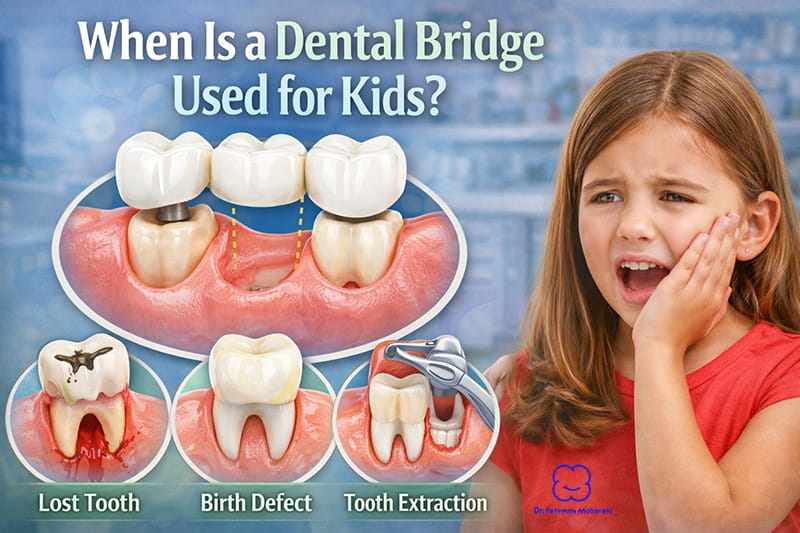
A dental bridge is considered when a tooth is completely missing.
This may happen due to:
- Dental trauma
- Severe decay requiring extraction
- Congenital absence of a tooth
However, in younger children, dentists often use alternatives like space maintainers instead of bridges. This approach preserves space for permanent teeth without altering nearby teeth.
How Does a Dental Crown Work?
A dental crown works by fully covering the visible part of a tooth, protecting it from further damage.
The process typically involves:
- Cleaning and preparing the tooth
- Taking impressions or digital scans
- Placing a temporary crown if needed
- Bonding the final crown securely
Modern crowns are made from materials such as zirconia or porcelain, offering both durability and a natural appearance. Parents often look into the Dental Crown Procedure to better understand what their child will experience.
How Does a Dental Bridge Replace Missing Teeth?
A dental bridge fills the gap left by a missing tooth.
It includes:
- A pontic (artificial tooth)
- Abutment teeth (supporting teeth on each side)
To place a bridge, the adjacent teeth are reshaped to hold crowns that support the pontic. Because this affects healthy teeth, dentists carefully evaluate whether a bridge is the best option for a child.
Crown vs Bridge Cost: What Should Parents Expect?
When considering crown vs bridge cost, crowns are usually less complex and therefore more affordable per tooth, while bridges involve multiple components.
Typical cost ranges:
- Dental crown: $1,000 – $2,500 per tooth
- 3-unit bridge: $2,000 – $5,000 total
Costs vary depending on materials, case complexity, and any additional treatments required. In pediatric dentistry, the focus is often on preserving teeth rather than long-term prosthetics.
Which Option Lasts Longer?
Durability is another key factor in the dental crown vs bridge comparison.
- Crowns typically last 10–15 years or more
- Bridges usually last 5–15 years
Longevity depends on oral hygiene, eating habits, and regular dental visits. Crowns often perform better long-term because they rely on a single tooth rather than multiple supporting structures.
Do Crowns or Bridges Affect Nearby Teeth?
Yes, and this difference is clinically important.
A crown affects only the treated tooth.
A bridge requires reshaping adjacent healthy teeth to support it.
Because of this, dentists often prefer crowns when possible, especially in children, to preserve natural tooth structure.
Can a Crown and Bridge Be Used Together?
Yes, a crowned tooth can sometimes support a bridge.
If a tooth already has a crown, it may serve as a stable anchor for a bridge. This depends on the strength of the tooth, bone support, and overall bite alignment.
How Do Dentists Choose the Right Option?
The decision between dental crown vs bridge is based on careful evaluation.
Dentists consider:
- Whether the tooth is present or missing
- The condition of surrounding teeth
- The child’s age and dental development
- Long-term effects on oral health
For children who feel anxious or require complex treatment, techniques like pediatric sedation dentistry can help ensure a comfortable experience.
Expert Insight
Clinical evidence shows that preserving natural tooth structure whenever possible leads to better long-term outcomes. Restorations like crowns support normal function and development, while unnecessary modification of healthy teeth should be avoided.
Dental Care Considerations in Dubai
In Dubai, pediatric dental care focuses on prevention and minimally invasive treatment. The goal is to maintain primary teeth until they naturally fall out, supporting proper spacing and alignment.
Dr. Mobaraki and other pediatric dentists often recommend conservative solutions such as crowns rather than bridges, especially for younger children whose jaws are still developing.
How Should Parents Care for Crowns or Bridges?
Proper care helps extend the life of restorations.
Important habits include:
- Brushing twice daily with fluoride toothpaste
- Cleaning carefully around restorations
- Using floss or floss threaders (especially for bridges)
- Avoiding very hard or sticky foods
- Attending regular dental checkups
Parents may also find it helpful to learn about the Types of Dental Crowns for Kids when considering treatment options.
Final Thoughts
The choice between dental crown vs bridge depends on the specific condition of your child’s tooth.
A crown is used to protect and restore a damaged tooth, while a bridge replaces a missing one. In most pediatric cases, preserving the natural tooth is the priority.
With the right approach, both treatments can restore function, support development, and help children maintain a healthy, confident smile.